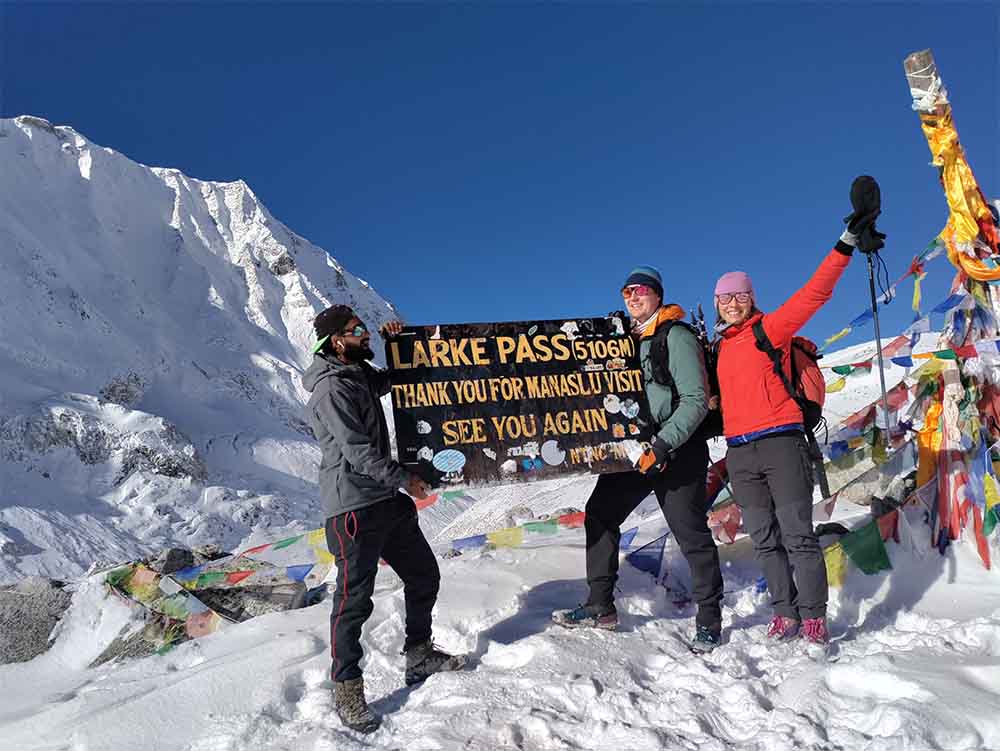
The Manaslu Expedition trek involves daily hikes of 6 to 7 hours through varied terrain. Good physical fitness is essential. The maximum height reached is 8,163 meters, the summit of Manaslu.
Starts
Kathmandu
Ends
Kathmandu / Pokhara
Group Size
1 Pax
Best Season
Mar-May, Sep-Nov
TRIP HIGHTLIGHTS
The Manaslu Expedition lets you climb the world’s eighth highest peak at 8,163 meters.
It combines thrilling mountaineering with stunning Himalayan views.
The route passes through remote valleys and culturally rich Tibetan–Nepalese villages.
Trekkers enjoy warm hospitality and unique local traditions.
Experienced Sherpa climbers and a skilled support team lead the expedition.
The trek to Base Camp offers forests, gorges, waterfalls, and mountain scenery.
Climbers see panoramic views of Manaslu, Himlung, Annapurna, and Ganesh Himal.
You may witness avalanches on the high slopes, showing the mountain’s raw power.
It is great training for Everest or other higher expeditions.
All logistics, including permits, equipment, and transport, are well organized.
The climb supports local communities and eco friendly mountaineering.
It is a complete adventure of challenge, culture, and Himalayan beauty.
TRIP OVERVIEW
Manaslu Expedition: Testing limits on the Mountain of the Spirit
The Manaslu Expedition is a climbing journey to Manaslu, the 8th highest mountain in the world, standing at 8,163 meters (26,781 feet). Located in the Mansiri Himal range in west central Nepal, Manaslu is known as “Kutang” and is revered as the “Mountain of the Spirit”, a name derived from the Sanskrit word “manasa”, meaning intellect or soul. The mountain was first successfully summited in 1956 by Japanese climber Toshio Imanishi and Sherpa Gyalzen Norbu, making the peak historically significant for Japanese mountaineering.
Manaslu Expedition combines high altitude mountaineering with deep wilderness trekking, offering climbers a spectacular but challenging adventure. The typical climb involves staging camps from base camp at around 4,700 meters to four higher camps set along the route. Climbers ascend varying steep and exposed snow slopes, requiring technical skills and fixed ropes at several sections. Acclimatization is carefully planned with rest days and rotations to higher camps, crucial to safely ascending to the summit.
The route commonly used for the expedition is the Northeast Face, which provides stunning panoramic views of the surrounding Himalayan peaks. Manaslu Expeditionclimbing season often includes helicopter transport to base camp, modern camping facilities with nutritious meals, and full climbing support from experienced Sherpa teams. The Manaslu Expedition typically lasts several weeks due to the emphasis on acclimatization and technical climbing phases.
Manaslu is known for its relatively higher success rates compared to other 8000 meter peaks, but the climb remains demanding due to unpredictable weather, snowstorms, crevassed glaciers, and high altitude exposure. The Manaslu Expedition is as much about mental endurance and respect for the mountain spirit as it is about physical prowess.
Table of Contents
The Cultural and Natural Experience
The Cultural and Natural Experience on the Manaslu Expedition is a deeply enriching part of the journey, far beyond the physical challenge of climbing. As trekkers and climbers make their way through the route, they pass through a succession of high altitude villages, each offering distinct glimpses into the traditional lifestyles and spiritual practices of the local Tibetan Buddhist culture.
Villages like Lho, Jagat, Deng, and Samagaun are more than stops along the trail, they are living museums of heritage. Lho village, for example, is home to the Nubri people, who maintain their centuries old customs, agricultural practices, and Tibetan style architecture using local materials like stone, mud, and wood. Their homes are protected by chortens and prayer walls believed to ward off bad spirits. The village’s community life revolves around farming barley, wheat, buckwheat, and potatoes, and greeting visitors with warm smiles that reflect a timeless way of life. Nearby monasteries like Ribung Gompa hold ancient manuscripts and vibrant thangka paintings, providing trekkers with the chance to witness traditional Buddhist rituals, chanting, and ceremonies.
The natural beauty surrounding these villages is equally breathtaking. Massive glaciers flow down from towering peaks, serene mountain lakes glisten in the sunlight, and rugged mountain passes open views of Manaslu’s colossal, snow capped summit along with other majestic surrounding peaks like Himalchuli and Ngadi Chuli. The Budhi Gandaki River meanders through deep valleys, with riverside villages showcasing sustainable water mills and traditional crafts that build a harmonic relationship between people and nature.
Daily village life is tied to the rhythms of farming, religious observance, and community gatherings, making any pause to observe a window into a sustainable mountain lifestyle. Traditional houses often blend practicality with culture, housing livestock below and families above, warmed by central hearths that are the heart of family connections during the harsh winters. Experiencing this blend of culture and nature on the Manaslu Expedition offers more than a climb; it provides a soulful journey of connection to the mountain and its people, reminding trekkers that these high places hold profound stories, spirituality, and resilience that have thrived for centuries.
Climbing Route and Camps in Manaslu Expedition
Concquer the majestic Manaslu, the 8th highest peak, and experience the breathtaking beauty of Nepal’s Himalayas.
The Manaslu Expedition starts with an exhilarating trek to the Base Camp, located at an elevation of about 4,700 to 4,800 meters above sea level. This Base Camp acts as the starting point for climbers, nestled amid the striking foothills of the towering Manaslu massif. Trekkers experience an immersive journey as they pass through quiet, untouched villages such as Samagaun and traverse verdant valleys, which not only offer breathtaking scenery but also provide a gradual acclimatization process. This initial trek helps climbers adjust mentally and physically to the demanding climb awaiting them.
From the Base Camp, climbers ascend the mountain by progressing through a series of established camps that function as vital rest and acclimatization stops. The first of these, Camp I, is positioned around 5,700 meters and involves navigating glacier moraines and crossing crevasses, deep fissures in the ice, demanding careful balancing and sometimes the use of ladders and fixed ropes. This terrain requires utmost attention as it reflects the powerful and unpredictable nature of the mountain environment.
The climb from Camp I to Camp II, set at about 6,400 meters, is marked by steeper ice and snow slopes. Climbers employ technical gear like crampons and ice axes alongside fixed ropes to overcome vertical icefalls and steep inclines safely. This camp offers a comparatively stable and flat terrain, providing a place to rest and gather strength for the more challenging climbs ahead.
The route from Camp II to Camp III, near 6,900 meters, is less technical but extremely demanding physically. Climbers cross smaller ice steps and leap over additional crevassed areas. The thinning air and sharp cold are felt acutely here, with fierce winds sweeping across the mountain. The stark, monochrome alpine landscape underscores the remote and harsh environment, testing climbers’ endurance.
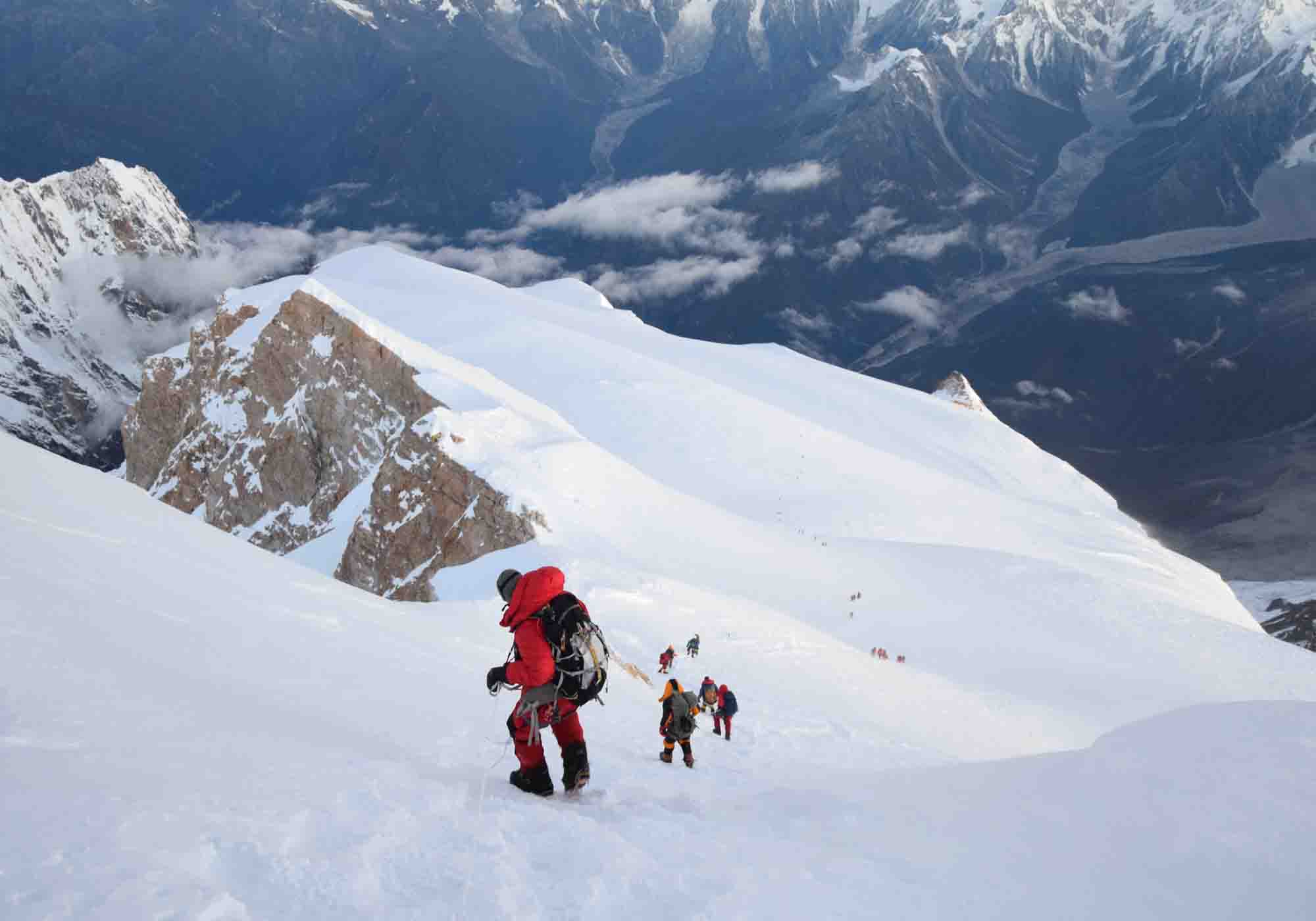
Ascending from Camp III to Camp IV, close to 7,300 meters, presents the most strenuous portion of the expedition before the final summit push. Climbers face steep slopes angled between 50° and 55°, demanding precise footwork, steady breathing, and immense stamina. Oxygen levels are critically low, making each step more exhausting than the last. Sherpa guides and fixed safety ropes play an essential role in supporting climbers safely through this precarious and exposed terrain.
On summit day, climbers typically commence their ascent very early, around 1:00 AM, tackling narrow ridges, icy shelves, and snow slopes along the northeast face, the standard and safest route to the peak. As dawn breaks, climbers are rewarded with sweeping views of the surrounding Himalayas. Reaching the summit at 8,163 meters is the ultimate reward, a testament to weeks of hard work, resilience, and perseverance.
After soaking in their achievement, climbers carefully descend the same route back to Camp IV and eventually down to the Base Camp. This staged ascent and descent not only facilitate essential acclimatization but also foster a deep connection with Manaslu’s grandeur, each step reflecting determination, respect, and reverence for the mountain. The northeast face route is preferred by expeditions for its blend of technical challenge and acclimatization opportunities, making it a popular choice for guided climbs, balancing safety with adventure spirit.
Best seasons for the Manaslu Expedition
Choosing the right season can greatly improve your experience and safety while climbing Manaslu. Here is a quick guide to the best times to plan your expedition:
Spring Season (March to May)
Spring is among the best times to climb Manaslu. The weather tends to be stable with mild temperatures, and the rhododendron forests bloom along the trail, adding beautiful colors. Avalanches are less common, and clear skies offer fantastic mountain views. This season is popular because climbing routes are more accessible and conditions are generally favorable.
Autumn Season (September to November)
Autumn is considered the prime climbing season for Manaslu. After the monsoons, the weather stabilizes, providing clear skies and cool daytime temperatures ideal for climbing. Nighttime temperatures drop but remain manageable. It is also when visibility is at its best, and the route is less crowded compared to other popular peaks, offering a quieter, enjoyable expedition.
Winter Season (December to February)
Winter expeditions are much tougher due to bitter cold, high winds, and elevated avalanche risks. The success rate is lower because of these harsh conditions. Only very experienced climbers seeking a serious challenge should attempt Manaslu during this time.
Summer/Monsoon Season (June to August)
Summer brings heavy rain and unpredictable weather, causing slippery trails and higher risks of avalanches and landslides. This season is generally not recommended for climbing Manaslu.
Complete Packing Guide for Manaslu Climb
A successful Manaslu Expedition requires smart packing with essentials like layered clothing, sturdy hiking boots, and reliable climbing gear. Include warm sleeping bags and camping gear for comfort, personal hygiene items for health, and electronics like headlamps and power banks for safety and navigation. Do not forget all necessary permits and travel documents. Packing thoughtfully ensures readiness for varied weather and challenging terrain, making the expedition safer and more enjoyable.
Clothing
Moisture Wicking Base Layers: These are thermal tops and bottoms made from synthetic or merino wool that pull sweat away from the skin, keeping you dry and warm.
Insulating Mid Layers: Fleece jackets or lightweight down jackets provide crucial warmth during cold mornings, evenings, and high altitude zones.
Waterproof and Windproof Outer Shell: A breathable, waterproof jacket and pants protect against rain, snow, and strong winds.
Trekking Pants: Lightweight, quick drying pants for lower elevation trekking and insulated pants for higher, colder altitudes.
Warm Hats and Buffs: A fleece or wool hat, along with neck gaiters or buffs, keeps your head and neck protected from cold and wind.
Gloves: Layered gloves, including inner fleece gloves and waterproof outer gloves, protect your hands in varying weather conditions.
Socks: Multiple pairs of thick, moisture wicking wool or synthetic socks prevent blisters and keep your feet warm.
Sun Protection Clothing: Long sleeve shirts and wide brimmed hats help shield you from intense UV rays at high altitudes.
Additional Accessories: Sunglasses with UV protection, gaiters to keep snow out of boots, and thermal underwear for extra warmth are recommended.
Climbing
Climbing Helmet: Essential for protecting your head from falling ice, rocks, and other debris during technical climbs.
Crampons: Steel crampons attach to your boots for traction on ice and steep snowy surfaces, preventing slips and falls.
Ice Axe: Used for climbing, self arresting during slips, and balance on icy slopes.
Climbing Harness: Provides safety when attaching to fixed ropes and for belaying during technical sections.
Carabiners and Slings: Used to secure ropes, connect gear, and create safety anchors.
Fixed Rope & Ascenders: Used for climbing steep, exposed sections where additional support is needed.
Mountaineering Boots: Insulated, crampon compatible boots designed for extreme cold and rugged terrain.
Climbing Gloves: Durable gloves provide grip and protect hands from cold and abrasions.
Camping and Sleeping Gear
Sleeping Bag: A high quality sleeping bag rated for temperatures between -10°C to -20°C is essential to keep warm during cold nights at high altitude.
Sleeping Bag Liner: A liner adds extra warmth and helps keep your sleeping bag clean, extending its life and comfort.
Sleeping Mat: An insulated foam or inflatable sleeping mat provides cushioning and insulation from the cold ground, ensuring a good night’s sleep.
Duffle Bag: Use a large, durable duffle bag (around 90-100L) to carry your gear, which can be transported by porters or yaks during the expedition.
Daypack: A smaller backpack (30-35L) to carry daily esentials such as water, snacks, and personal items while trekking.
Tent (if self supported): High quality, four season tents are suitable for extreme weather if you are camping independently rather than staying in organized camps.
Camping Stove & Fuel: If cooking independently, a portable stove and fuel are required for preparing meals and boiling water.
Cookware and utensils: Lightweight pots, pans, and utensils for meal preparation during the expedition.
Water Bottles and Purification: Durable water bottles (eg, Nalgene 1L to 2L) and purification systems like tablets or filters to ensure safe drinking water.
Personal Care and Hygiene
Toothbrush and Toothpaste: Carry a compact toothbrush and eco friendly toothpaste to maintain oral hygiene during the trek.
Biodegradable Soap and Shampoo: Use environmentally safe soap and shampoo to stay clean without harming the fragile mountain ecosystem.
Quick Dry Towel: A lightweight, quick drying towel is essential for hygiene and convenience in remote areas.
Wet Wipes and Hand Sanitizer: For cleansing hands and face when water is scarce, helping to prevent illness and maintain freshness.
Sunscreen and Lip Balm with SPF: Protect skin and lips from harsh UV rays at high altitudes to avoid sunburn and chapping.
Personal First Aid Kit: Include bandages, antiseptic wipes, blister treatments, painkillers, altitude sickness medicine, and any prescribed medications.
Deodorant and Nail Clippers: Basic personal care items help maintain comfort during long days on the trail.
Feminine Hygiene Products: Essential supplies such as sanitary pads, tampons, or menstrual cups with disposal bags for women.
Moisturizers and Lip Care: Cold weather can dry out skin, so carry moisturizer to protect hands and face, along with lip balm.
Toilet Paper and Small Shovel: Carry toilet paper and practice Leave No Trace principles; a small shovel helps with responsible waste disposal when needed.
Travel Documents and Permits
Passport and Visa: A valid passport with a Nepal visa is mandatory for entry. Visas can be obtained on arrival or in advance at Nepalese embassies.
Manaslu Restricted Area Permit (RAP): This permit is required to trek in the restricted Manaslu region.
Manaslu Conservation Area Permit (MCAP): Issued by the Nepal Trust for Nature Conservation, this permit supports environmental and community conservation.
Annapurna Conservation Area Permit (ACAP): If your Manaslu trek joins the Annapurna region, this permit is necessary to enter and trek within the Annapurna Conservation Area.
TIMS (Trekkers’ Information Management System) Card: Required by the Nepal Tourism Board, this card tracks trekkers for safety and rescue purposes.
Medical and Insurance Documents: It is strongly recommended to have travel insurance covering high altitude trekking and emergency evacuation.
Electronics and Navigation
Power Banks: Portable chargers ensure your electronic devices, like phones and cameras, stay powered during long stretches without electricity.
Mobile Phone and SIM Card: Useful for communication and emergency contact; local SIMs can provide coverage in some areas.
GPS Device or Apps: Handheld GPS units or smartphone apps with offline maps help navigate and track the trail.
Camera: To capture the breathtaking landscapes and memories of the expedition.
Charging Adapters and Solar Chargers: Universal adapters and solar panels help keep devices charged, especially at camps without consistent power.
Satellite Phone: Optional but recommended for emergency communication in remote areas without cellular coverage.
Personal Locator Beacon (PLB): Provides an additional safety measure for emergency location tracking and help.
Facing the Real Challenges: What Makes the Manaslu Expedition Tough
The Manaslu Expedition is a demanding adventure, presenting climbers with high altitudes, steep icy slopes, and unpredictable weather that require careful preparation. Altitude sickness is a significant risk due to the extreme elevation, while crevasses and avalanche threats add to the technical challenges. Safety depends on acclimatization, experienced guides, and constant vigilance, making resilience and preparedness essential for a successful and secure climb.
Higher Success Rate:
Manaslu has a success rate of about 60% to 70%, which is relatively higher than many other 8,000 meter peaks. This improvement is largely due to better logistics, experienced Sherpa support, fixed ropes on technical sections, and well established base and high camps.
Though it remains a challenging climb, thorough preparation, proper acclimatization, and the use of supplemental oxygen greatly increase the chances of a safe summit. Ongoing advancements in climbing gear, techniques, and safety measures also contribute to making Manaslu a popular and achievable goal for experienced mountaineers seeking a serious yet rewarding Himalayan ascent.
Battling the High Altitude
Climbing above 8,000 meters takes you into the “death zone,” where oxygen levels are dangerously low. This environment increases the risk of altitude sickness, requiring careful acclimatization and constant monitoring of your health. Proper hydration, pacing, and rest days are vital to safely manage this challenge.
The Isolation Factor
Manaslu’s remote environment means help and supplies are not easily accessible. Communication networks can be unreliable, and evacuation options are limited, making self sufficiency and the ability to handle emergencies crucial. This isolation can also increase the psychological stress on climbers.
Terrain and Route Complexity
The expedition route is a mix of neutral terrain and technical climbing sections. From icy glaciers to rocky ridges and exposed snowfields, climbers must constantly adjust their techniques and remain vigilant about foot placement and safety.
Weather and Environmental Conditions on the Manaslu Expedition
Manaslu’s weather is a dance of extremes. In spring and autumn, trekkers enjoy mild, stable skies, perfect for trekking with temperatures ranging from cool days to chilly nights. But winter bites hard with plunging temperatures and packed snow, especially above 3,500 meters, turning trails icy and steep.
The monsoon season brings heavy rain and slippery trails at lower elevations, though the Nubri Valley experiences a rain shadow effect with less precipitation. Sudden storms or strong winds can strike unexpectedly, weather, demanding respect, preparedness, and a spirit ready to embrace nature’s challenge.
Glacier Crevasses:
The Manaslu Expedition requires navigating crevasses, particularly between Base Camp and Camp I. These crevasses vary but can be safely crossed with crampons, fixed ropes, and ladders. Climbers must have strong glacier travel skills and be alert to hidden dangers. Teamwork and proper use of safety gear are crucial to prevent accidents. With careful guidance and preparation, these challenging glacier sections can be managed confidently on the way to higher camps.
Safety First: Protocols and Emergency Measures on Manaslu Expedition
Climbing Manaslu means respecting the mountain and being prepared for uncertainties. Safety starts with proper gear and careful acclimatization to tackle altitude sickness. Licensed guides lead the way, ensuring teamwork and swift response in tricky terrain.
Emergency plans are in place, including communication device and trained support, with helicopter rescues ready if needed. Knowing first aid basics, carrying essential supplies, and maintaining awareness of weather changes help keep everyone safe. On Manaslu, safety is not just a rule, it is a shared commitment to protect every step of the adventure.
The Role of Teamwork in Manaslu Expedition Success
Team work is fundamental to the success of the Manaslu expedition, where climbers rely on each other’s strength, skills, and endurance to face the mountain’s physically demanding and technical challenges. Effective communication and collaboration between climbers, Sherpa guides, and porters ensure safety and mutual support, especially in navigating hazards like avalanches, icefalls, and altitude sickness.
The expedition demands precise coordination, quick decision making, and steadfast dedication, with all team members working in unison to overcome the harsh environment. This shared effort is not only essential for survival but also enriches the experience, culminating in a triumphant summit achieved together. The deep reliance on skilled Sherpa guides and local porters further highlights how teamwork in logistics and emergency support is indispensable for a successful and safe ascent of Manaslu.
Psychological Strength for Manaslu Success
Climbing Manaslu demands more than physical fitness; it calls for strong mental fortitude. The mountain challenges climbers with harsh weather, high altitude, and long, exhausting days. Staying calm under pressure, being focused in moments of doubt, and being resilient through mental fatigue are what set successful climbers apart. Mental preparation through meditation, visualization, and a positive mindset builds the endurance needed to face the climb’s uncertainties. This inner strength keeps climbers moving forward, turning fear and exhaustion into determination and success.
Facing the Threat of Avalanches
Avalanches are one of the biggest dangers when climbing Manaslu. The mountain’s steep slopes and heavy snowfall make it prone to sudden snowslides that can sweep climbers away without warning. These avalanches can be triggered by fresh snow, strong winds, or even movement on the mountain. Over the years, many climbers have been injured or lost their lives due to avalanches in key sections like between Camp III and Camp IV. That is why having experienced guides who continuously monitor the conditions and lead with caution is so important to keep you safe and confident on this incredible journey.
Technical Challenges
Climbing Manaslu is no walk in the park; it is a serious mountain that tests your technical skills at every step. From navigating steep icefalls and tricky crevasses to relying on fixed ropes across vertical snow slopes, this climb requires you to be confident with your gear and movements.
The section between Camp I and Camp II is widely known as one of the toughest, with dangerous ice seracs above that can collapse without warning. Also, the steep slopes near Camp IV demand careful footwork and intense focus, especially with the thin air making every breath and step harder.
That is why having solid mountaineering experience and trusting your Sherpa guide is key to helping you get through these technical parts safely and keep you moving upward. These challenges are part of what makes the Manaslu expedition a true test of skill, preparation, and resilience.
Where to Stay During the Manaslu Expedition
On the Manaslu expedition, accommodation is mostly simple but welcoming. Along the trail, trekkers usually stay in teahouses, small family-run lodges that provide a bed, meals, and sometimes hot showers. In the lower villages, teahouses can be quite comfortable with private rooms and western style bathrooms, but as you go higher, the rooms get more basic, often shared dormitories with squat toilets.
For the adventurous, camping is also an option, especially on the climbing sections, where tents are set up by expedition teams. Camping offers a more isolated experience but requires extra gear and support.
Overall, accommodation on Manaslu is modest but warm, offering a chance to experience true mountain hospitality and local culture. Booking ahead during busy seasons is wise to ensure a place to rest after a long day on the trail.
How to Reach the Manaslu Expedition Base
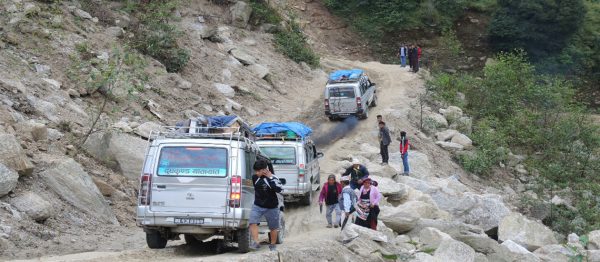
Travel to the Manaslu expedition starts with a scenic jeep or bus ride from Kathmandu to the trailhead.
Reaching the Manaslu Expedition base typically starts with a flight into Kathmandu, the capital of Nepal, and the main hub for international arrivals. From Kathmandu, climbers travel by jeep or local bus to access points such as Dharapain or Smagaun, depending on the specific expedition route. The journey is long, mountainous and winding roads, often taking between 6 to 9 hours. Jeeps offer a faster and more comfortable ride compared to local buses, which are more economical but slower.
In some cases, a helicopter transfers are arranged to save time and avoid the rough road journey, flying directly to high base villages like Samagaun. From these access points, climbers begin the trek to Manaslu Base Camp, which sits at approximately 4,800 meters, marking the start of the technical climbing portion of the expedition. The route to base camp passes through remote villages, lush forests, and gradually ascends into the higher Himalayas, preparing climbers for the challenges ahead.
Flexibility on the Manaslu Expedition: When Plans Need to Change
Sometimes, the standard Manaslu Expedition route or schedule may not suit every climber or may become impractical due to weather, logistics, or personal readiness. In such cases, there is flexibility to adjust plans. Alternative trekking routes around the Manaslu region, like the Tsum Valley or Lower Manaslu treks, offer beautiful landscapes and rich cultural experiences with less technical difficulty.
For climbing, though the northeast face is the usual path, special permissions can sometimes allow alternate, less traveled routes. Ultimately, the priority is safety and a fulfilling experience, so adjusting the expedition to suit conditions or climber needs is not only possible but encouraged. This approach ensures that the spirit of adventure can continue, even if the path changes.
Manaslu Guides Nepal ensures that every climber is supported with expert advice and flexible planning, helping to adapt quickly to any change in conditions or needs. With our dedicated team and local knowledge, your safety and success remain the top priority throughout the expedition, no matter how the journey unfolds.
Permit Acquisition and Expedition Logistics for Manaslu Climbers
Climbing Mount Manaslu, the eighth highest peak in the world, requires careful attention to permit acquisition and expedition logistics due to the mountain’s remote location and its designation as a restricted area by the Nepalese government. Understanding and navigating this process is essential to ensure a legal, safe, and successful expedition.
Permit Requirements:
To legally enter and climb in the Manaslu region, climbers must secure multiple permits issued by the Nepalese government and related authorities. The primary permits include:
Manaslu Restricted Area Permit (RAP):
This permit controls access to Manaslu’s restricted and culturally sensitive zones, issued to regulate and protect the environment and local communities.
Manaslu Conservation Area Permit (MCAP):
Required to trek in the Manaslu Conservation Area, this permit supports conservation efforts and sustainable tourism in this ecologically critical zone.
Annapurna Conservation Area Permit (ACAP):
Since portions of the trek cross into the Annapurna Conservation Area, this permit is mandatory for those segments.
Trekker’s Information Management System (TIMS) Card:
Standard for most trekking regions in Nepal, this card registers trekkers for safety and rescue purposes.
In addition, certain local permits such as the Chumnubri Rural Municipality Permit may be necessary depending on the exact trekking route. These permits ensure that the expedition respects local governance and environmental protections.
Application Process and Logistics:
Obtaining these permits typically requires the assistance of a registered trekking agency. Climbers are mandated to trek with a licensed guide or at least one other person, enhancing safety and compliance with regulations. For example, Manaslu Guides Nepal is a reputable trekking company that provides licensed local guides essential for navigating this restricted area safely while enriching the trek with cultural insights and expert support.
Documents needed for permits generally include a valid passport, Nepal visa, passport-sized photos, and proof of the trekking or climbing itinerary. Permit costs vary based on the trekking season and the length of stay. Peak climbing permits for Manaslu itself involve payment of royalty fees, which can be substantial.
Logistically, the expedition demands detailed planning. Beyond permits, climbers must arrange for guides, porters, and appropriate gear. Coordination with local support teams such as Manaslu Guides Nepal ensures acclimatization schedules and safety protocols are adhered to, especially given Manaslu’s high altitude and technical climbing challenges. Their experienced guides play a critical role in managing the complexities of the trek, from fixing ropes to handling emergencies, ensuring both safety and success.
Benefits of Regulation:
The permit system and regulatory framework for the Manaslu expedition are designed to safeguard the delicate mountain environment, support the livelihoods of local communities, and preserve the region’s rich cultural heritage. These regulations ensure that climbing activities are conducted responsibly, helping to minimize the impact on the natural landscape and reduce environmental degradation. By following these protocols, climbers contribute to sustainable tourism that benefits both the environment and the people who call Manaslu home.
In essence, careful permit acquisition combined with thorough logistical preparation forms the backbone of a successful Manaslu expedition. Climbers are expected to plan well ahead, collaborate with authorized agencies and local guides, and adhere strictly to government rules. This not only ensures their safety in challenging high-altitude conditions but also promotes the long-term preservation of Manaslu’s pristine beauty, allowing future adventurers to experience this majestic peak in its unspoiled form.
Emergency Assistance and Rescue Options
During the Manaslu Expedition, emergency rescue services are well established and ready to respond swiftly to any urgent situation. Manaslu Guides Nepal plays a crucial role in ensuring climbers’ safety by coordinating with the helicopter rescue services and medical teams. If a climber suffers from severe altitude sickness, injury, or any other life threatening condition, the guides immediately initiate a rescue call. Helicopters are dispatched to designated evacuation points such as Samagaun, Samdo, Bimthang, and Dharapani, where they can safely land and pick up the individual.
After the rescue, the helicopter transports the climber to medical facilities in Kathmandu or other equipped hospitals for advanced care. This quick and efficient system provides peace of mind for climbers, knowing that help is available in remote and challenging terrain. Manaslu Guides Nepal’s expert coordination with rescue teams adds an extra layer of safety, ensuring that every expedition member receives the best possible assistance and care in emergencies. This reliable rescue infrastructure makes the expedition much safer and allows adventurers to focus on their climb with confidence.
Itinerary
Expand AllCollapse
All
DAY 01
Arrival day in Kathmandu (1,300m/4,264 ft)
Arrive at Kathmandu, Tribhuvan International Airport.
Our representative will welcome you and drop you at your hotel.
Hotel checks out and take a rest and relax.
Stroll around the Thamel area which is a popular tourist hub.
Enjoy welcome dinner held in our honor.
Overnight in Kathmandu.
Breakfast2/3 Stars Hotel
DAY 02
Kathmandu: sightseeing and preparation
Morning breakfast.
Visit Kathmandu major world heritage site with our guide.
Take a short explanation class by our representative about the further trek.
Be prepared for the next day trek.
Stay overnight at the hotel.
Breakfast3/4 Star Hotel3-4 hrs walk
DAY 03
Drive Kathmandu to Soti Khola-6050mtr, 6/7hours
Hotel breakfast and check out
Pick up by our team and transfer to the bus park or by private jeep.
A scenic bus/jeep ride takes us to Sotikhola the starting point of the Manaslu Region.
Soti khola hotel check in
Dinner and overnight stay at the hotel.
Traveler’s note: Soti is a small town and popular for marketing of local people from Northern part. of Gorkha District, Most of the people are Buddhist and Hindu and it is situated in Bank of Bhudhi Gandaki River which is started from Tsum valley and Larke pass.
Breakfast / Lunch / DinnerGuest house/ Lodge 5-6 hrs walk
DAY 04
Soti Khola to Maccha Khola (870m/2,952ft) 5-6 hours.
Hotel breakfast and check out
From here the road takes us to Machhakhola
Dinner and overnight stay at Machhakhola
Traveler’s note: Majority of the way is by bank of the BudhiGandaki river and. You can expect waterfall, monkey watching, rice field, green forest and if the weather permits us we can see our first views of the Ganesh Himal, look out on the road, there is a high chance to see waterfalls as well corssing sevral local sattelments.
Breakfast / Lunch / DinnerTea house / Lodge4-5 hrs walk
DAY 05
Maccha Khola to Jagat (2340m/ 7676ft) 6-7 hours
Breakfast and departure
Today the Ganesh Himal is in clear view
We pass some waterfalls, stone paved ways and a mani wall
Arrival in Jagat
Dinner and overnight stay in Jagat
Traveler’s note: Amazing views of the Ganesh and Shingri Himal await us today, from Jagat the previous restricted trekking area will start along with our adventure!
Breakfast / Lunch / DinnerTea house / Lodge5-6 hrs walk
DAY 06
Jagat trek to Deng (1860 m)
Breakfast and departure
We start the trail by heading gently uphill
Followed by a flat leveled plateau we continue until reaching the river crossing
Cross the suspension bridge over the Bhudi Gandaki and enter Philim village
Climbing uphill further until reaching Ekle Bhatti
Again Cross the suspension bridge and get reach to Deng
Dinner and overnight stay at Deng
Traveler’s note: Today our destination is Deng. where You can try local food with good test . On proceeding further you cross the Siyar Khola bridge and reach a junction where the trail separates to Tsum valley on your right. Like this we walk and reach Deng and we will spend over night there.
Breakfast / Lunch / DinnerTea house / Lodge 5-6 hrs walk
DAY 07
Deng trek to Namrung (2,630m)
Breakfast and departure
Starting by heading down to the riverside
After crossing the bridge an upwards climb takes us to Ranagoan
From here we trek further to Bihi Phedi
The trail splits in to two and we take the right side trail to Ghap
After passing through Ghap village we climb up to Namrung
Dinner and overnight stay at Namrung village
Traveler’s note: Today we get clear views of the Ganesh, Shingri and Kutang Himal.
Breakfast / Lunch / DinnerTea house / Lodge 3-4 hrs walk
DAY 08
Namrung trek to Lho (3,180m) 4 Hours walking.
Breakfast and departure
Permit check post and start the trail towards Lho
Following the path through Lihi Gaon
Continue downwards to Sho Goan
It’s not long before we reach the village of Lho
Lunch ,Dinner and overnight stay in Lho village.
Traveler’s note: The eight highest mountain the world, Mt Manaslu comes in sight today! Today is the first day to see Manaslu and specially the real exciting view of Larke gonna start from today. and also we gonna see most of the locals clad in traditional Tibetan dress while walking in the way to Lho. from this day we will move towards the high quite altitude, So it is recommended to walk walk slowly and check your body signs by bring carful.
Breakfast / Lunch / DinnerTea house / Lodge 8-9 hrs walk
DAY 09
Lho Trek to Samagau (Ryo) (3520 m) 4 hrs walking.
Breakfast and departure
Today is a short trek as we head gradualy up towards Sama (Ryo)
Stopping in Shyala to take in the amazing 360 degree Himalayan view
We head further until reaching Sama (Ryo)
Dinner and overnight stay in Sama (Ryo) Village
Traveler’s note: Sama is localy more known as Samagaon, gaon meaning village. Today incredible views await of the, Manaslu, Himal Chuli, Nadi Peak, Naike Peak, Kutang Himal and the Pangbuche Himal. Shyala is the first town we gonna have today which is one of the best view point of this region to see 360 degree only mountain from town.
Breakfast / Lunch / DinnerTea house / Lodge 8-9 hrs walk
DAY 10
Sama (Ryo) Acclimatization day
Breakfast
A well-deserved acclimatization day is planned today
After breakfast we can take a hike to get more used to the high altitude
Option 1: hike around Birendra Lake and Manaslu Base Camp
Option 2: hike up to the Pungen Gumpa
Dinner and overnight stay in Sama (Ryo)
Traveler’s note:Samagaun is a village development committee in Gorkha District in the Gandaki Zone of northern-central Nepal. At the time of the 1991 Nepal census it had a population of 665 and had 179 houses in the village. Today is an acclimatization day, we can hike around Birendra lake/Manaslu Base camp or Pungen Gumpa etc. discuss with guide which one gonna be best one according your fitness and desire.
Breakfast / Lunch / DinnerTea house / Lodge7-8 hours walk
DAY 11
Samagaon to Manaslu Base Camp (4700 meter)
Breakfast and departure
Climb upwards to Manaslu Base Camp
Pass through Birendra Lake
Overnight camping in Manaslu Base Camp
Breakfast / Lunch / DinnerTea house / Lodge7-8 hrs walk
DAY 12 to 33
Manaslu Climbing Period (8163 meter)- By camping
Following the Climbing expert with needed equipments, climb to Manaslu by camping. All meals will be provided in camp.
Breakfast / Lunch / DinnerTea house / Lodge 3 hrs walk
DAY 34
Trek back Manaslu Base Camp to Samagaon
Breakfast and departure
Dinner and overnight
Breakfast / Lunch / DinnerTea house / Lodge
DAY 35
Samagau-Trek to Samdo (12,713 feet / 3,875 m) 3/4hrs walking.
Breakfast and departure
It’s a relatively short trek today up to Samdo
Due to the high elevation we take it slowly while climbing upwards
By lunch time we reach Samdo village
In the afternoon we can rest or take a hike up to Samdo Peak
Dinner and overnight stay at Samdo
Traveler’s note: the views of Mt Manaslu from Samdo Peak are just incredible is you have the stamina it is worth hiking up there. Samdo is a well-known Tibetan refugee camp. After spending a hole day and 2 night on samagau we start our treks towards the samdo or close to hiking options . samdo has excellent views of Manaslu along with other Himalayan ranges including Simrang, Hiunchuli, Ngadi, Larkye Peak, Cheo, and possibly Kang Guru behind the pass. Here we can many kinds of beautiful mountain birds like the Lophophorus (the national bird of Nepal), .we can see yak, houres, mountain mouse, bluesheep etc.
Breakfast / Lunch / DinnerTea house / Lodge 6-7 hrs walk
DAY 36
Samdo to Dharamsala (14,633 feet / 4,460 m) 4/5hrs walking.
Breakfast and departure
Today we head to the foot of the Larya La, Dharmasala
The trail leads us slowly upwards until reaching our overnight stop
Dinner and overnight stay in Dharmasala
Traveler’s note: tomorrow we face our first pass the Larkya La at 5,160 meter, better take a good night rest and prepare your camera batteries. Did you know that Dharmasala is also known as Larkya Phedi ? After breakfast, today we move through the samdo to Dharamsala you will pass a seasonal Tibetan market called Larke Bazaar beside to the Budi Gandaki Rive. you’ll see many traditional monasteries. While walking towards the dharamsala . we will do shorter hike leaves time for acclimatization and relaxing in the afternoon in dharmsala.
Breakfast / Lunch / DinnerTea house / Lodge - 2/3 Stars Hotel8-9 hrs walk
DAY 37
Dharmasala to Bhimtang (3,590m) via Larkya La Pass (5,160m) 7/8 hours walking.
Early breakfast and departure
The trail goes slowly up until reaching the Larkya La pass
At the Pass we take a break to enjoy the amazing views
After finishing our crossing the trail leads downhill to Bhimtang
Dinner and overnight stay at Bhimtang village
Traveler’s note: from the Larkya La Pass we get some amazing views of the Cheo Himal, Gyaji Kung, Kang Guru and the Annapurna II. All above 6,000 meter mountains! Today is one of the crucial and most waited day of the trip for great view and adventure. (7-8 hrs) Once you got in Bhimthang, it might be best accommodation of the trek and right place to celebrate great success of Larke La.
Breakfast / Lunch / DinnerTea house / Lodge 6-7 hrs walk
DAY 38
Bimthang to Tilije ( 2,300 m/7,546 feet ) 5/5hrs. walking
Breakfast and departure
We hike downhill for the most part of the day
After a good 4 hours we reach the village of Ghoa
From here we continue downwards to Tilje
Dinner and overnight stay in Tilje village
Traveler’s note: waking up early today allows for an amazing sunrise view from the teahouse. After passing the top peek of the world we are in the bimthang by having and we are starting our next journey towards the tilije .tilije is the beautiful village with beautiful people of there local culture . In tilije we can have good hotels and we can find free wi-fie after crossing the mountain.
Breakfast / Lunch / DinnerTea house / Lodge 35 mins flight
DAY 39
(Tilije trek to Dharapani and drive to Besisahar by jeep. 6/7 hours.
Breakfast and departure
Following the trail down to Dharapani.
The path leads us through pine forests and several small villages
Lunch in Dharapani arrange jeep to Besisahar.
After Lunch Drive to Besisahar.
Traveler’s note: This is our last day of massive Manaslu circuit trek, after arrive Besisahar by 4 hours driving, get into the town, good food and drinks then plan for the further days.
Breakfast / Lunch / DinnerTea house / Lodge
DAYS 40
rive to Kathmandu or Pokhara by Tourist Bus 5/6 hrs. driving.
Breakfast and departure
Drive to your destination
Traveler’s note: Guide and porters will drive back to kathmandu, if our clients would have time we recommend them to spend few nights in Pokhara, which is a beautiful touristic town of Nepal. so we transfer to pokhara or if no time then together drive back to kathamndu.
Breakfast / Lunch / Dinner 2/3 Stars Hotel
Itinerary Note
If you’re interested in extending your adventure in Nepal, we offer a variety of exciting options. Discover the serene beauty of Pokhara, explore the wildlife in Chitwan National Park, or immerse yourself in the rich history with our Kathmandu Cultural Heritage Tours. For those looking for international experiences, we also offer tours to Tibet, India, and Bhutan.
Our standard itinerary may vary due to unforeseen circumstances like flight delays, weather changes, or health concerns. We advise arriving a day early to rest and prepare, with extra buffer days for international flights. The itinerary serves as a guideline and can be adjusted based on client preferences, fitness levels, and ground realities. If you're not satisfied or have an alternative plan please feel free to discuss it with us By Clicking :- ASK QUESTION or CUSTOMIZE YOUR TRIP.
Airport pick up and drop off by Car, jeep, Hi-ace or Bus. Depends on the number of arrivals.
Complimentary welcome or farewell dinner according to the suitability of our client’s time.
Beginning two nights stay on arrival in Kathmandu in tourist standard hotel with breakfast included (twin share basis)
All necessary trekking and restricted area permit & fees, (Entry Permit, Manaslu conservation area permit, Manaslu Restricted area special permit and TIMs cards).
OPTIONAL: Three meals a day during the trek (If of required, we provide meal during the trekking)
OPTIONAL: All accommodation during trek (If of required we arrange all accommodation)
An experienced, English-speaking, government-licensed, first aid trained, mountain guide (5 trekkers: 1 guide)
An expert local porter (2 trekkers: 1 porter)
Duffel bag, (to be returned after trip completion), complementary trekking maps. If needed down jacket and sleeping bag will be provided in rent.
Staff costs including their salary, insurance, equipment, transport, food and accommodation.
Rescue arrangements if necessary.
Basic First-aid kit (carried by your mountain guide)
All government and local taxes for Trekking, Climbing, Agency service charge and government tax/vat.
Achievement Certificate
Cost Excludes
International airfare and Nepal visa fee.
Lunch and Dinner in Kathmandu
Extra night accommodation in Kathmandu because of early arrival, late departure, early return from mountain (due to any reason) than in the scheduled itinerary
Meal and accommodations in mountain. (can be arranged by company as per the package agreement )
Personal insurance which covers medical, emergency evacuation, loss or theft of property.
Personal gears and equipment.
Personal expenses such as laundry, hot showers, battery charging, Wifi, etc
Entry fees and costs in sightseeing (temples, monasteries, etc)
Tips and gratitude provided to guide and porter.
No fixed departures for this trek yet. Contact us for a private trek.
Fixed Departure Note
Join our group trek with a fixed departure date, or choose your own date with our Private Trip option, which offers daily availability.
Guaranteed: The trip will definitely run on this date. Available: The trip will run once the minimum group size is met. Limited: Only a few seats left—book soon! Closed: No seats left for this group. Please consider a private trip.
Physically fit person can attempt. There are no any limitation or obligation to climb a peak
I have never climbed before. Can I go for peak climbing?
Yes if you are physically fit, you can climb a peak.
Do I need climbing permit for Manaslu Expedition?
Climbing permit are mandatory during the peak climbing. It is the permission to enter into restricted area.
Who will lead me during climbing?
Manaslu trek is restricted area trek where you need a special permit from Nepal government immigration department. Climbing expert and porters are very important during your Manaslu expedition. Climbing expert knows the different trekking trails. Not only that Climbing expert explains about community and cultures their lifestyles. The Climbing expert will book your accommodation and everything in advance even during high season. You will have good communication with local people with Climbing expert. Before climbing mountain you will be trained and during climbing period Climbing expert will take a lead on you.
Which is the best season for Manaslu Expedition?
During the pre-monsoon and post monsoon will be the best season for Manaslu Expedition. The months of pre-monsoon are March, April, July and post monsoon are September, October, November. In December, January, February the weather might get a little bit colder and in June, July, August rain might cause a problem. If the travelers want to avoid the crowd and enjoy the trip privately then our guides can assist through the alternative trials.
Do I need to join in a climbing group?
Joining a group is not mandatory but climbing solo will be unsafe for you so we prefer you to hire a guide and porter, who can guide you in the mountain.
What will be the food and accommodation during the Manaslu Expedition?
We’ll be serving traditional trekking food such as dal bhat (the Nepali national dish of rice, dal and vegetables), pasta, soups, potatoes, bread, fruits, eggs. We’ll try where possible to use fresh local goods. We’ll serve portions big enough to match your calorific needs. If you have special dietary requirements, please let us know. For the overnight stay we prefer tea house and camping.
How much time is generally required for Manaslu Expedition?
Generally, time for summit depends upon the peak elevation and weather condition of the mountain.
How difficult are the trekking peaks?
Trekking peaks is a difficult task. Climbers risk their life and summit the mountain, during the period of climbing the mountain there are chances of being sick, weather condition may be challenging, the route may be challenging, adjusting in food and so on.
Is there any age limit for trekking Peaks Climbing?
The climber should be minimum 16 years but there is no any age limit for peak climbing in Nepal
What are the sources of drinking water supply during Peak Climbing?
Bottled filter water are available in the trekking trial and in the camp kitchen hot boiled water are available. Bottled filter water are carried during the peak climbing.
Where do we eat our meals?
During the stay in tea house, tea house will serve you with the menu and during camping, representative from our company will serve you.
What problems can arise on altitude?
Altitude sickness is also known as mountain sickness. Mountain sickness is the main problem for any mountain climbers or trekkers. Sometime trekkers might have altitude sickness during Manaslu Expedition. There are different types of sickness like-
AMS – Acute Mountain sickness – AMS is a very common sickness like a hangover, dizziness, muscle ache, nausea, headache vomiting etc
HAPE – High Altitude Pulmonary Edema – HAPE direct impact on lungs it’s fluid in the lungs which are dangerous for breathing.
HACE- High Altitude Cerebral Edema – HACE it’s the different form of altitude sickness its fluid in the brains
Thus, HAPE and HACE are the main dangerous and life-threatening form of mountain sickness. Patient has to treat on time if not treated on time if late they may die. Whereas AMS is normal mountain sickness then HACE and HAPE.
What are the tips for avoiding altitude sickness?
There are some tips to which our company would like to guide for the travelers to avoid altitude sickness; such as:
Avoiding the drinks which contains the caffeine added, smoking and alcohol
Travel slowly concerning your health
Drinking more amount of water i.e. minimum 3-4 liters per day
Being familiarized with the environment and having a healthy foods and beverage
Continuing with Diamox if needed, it is carried for the backup
We prefer Garlic soups to sustain the environment
Do I need travel insurance?
Yes, The travelers should have the international insurance which should cover the emergency evacuation, medical conditions and accidental cases. In case of insurance the travelers are need to pay here in Nepal first and then claim to their insurance company later.
Is there communication facilities on the mountain?
For the communication, mobile phones are used all over the Nepal and the facility of internet are available in the mobile phones and tea houses as well.
What is the cost of Peak Climbing?
It depends upon the duration of the travel, number of climbers and destination where the cost includes domestic transportation cost, trekking cost, staff cost, permit cost, accommodation and so on.
You may like this
Similar trip on Region
You may also like to explore similar packages from same region...explore more trips

 Moderate
 USD $830 - 1060