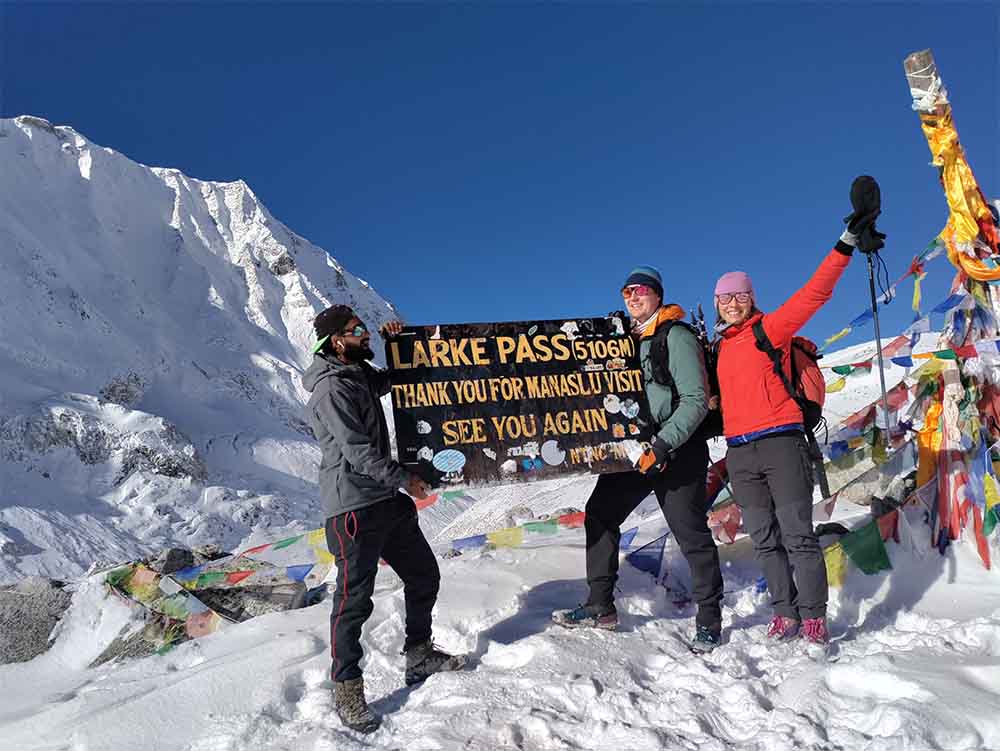
Larke Peak Climbing is challenging, requiring trekkers to navigate steep ridges, glaciers, and mixed rock, snow, and ice terrain. Climbers need good physical fitness, technical skills, and high altitude experience to tackle the summit safely.
Starts
Kathmandu
Ends
Kathmandu / Pokhara
Group Size
1 Pax
Best Season
Mar-May, Sep-Nov
TRIP HIGHTLIGHTS
Beautiful Monasteries, high altitude lakes, glaciers, and sustaining views of mountains.
Unspoiled and non-commercialized trekking route.
Meeting the Annapurna Circuit Trail and the view of mountains in the Annapurna range
Trekking over the glacial trails, camping in an absolute wilderness.
Fascinating cultural experience of the remote mountains.
Climbing fascinating Larkya Peak (6249 meter)
Climbing Larkya Peak with special permit
Cultural Sightseeing Tour of Kathmandu
Peaceful Yet Adventurous Walk All Throughout the Trip
Larke Peak Climbing is a spectacular alpine adventure located in Nepal’s Manaslu Conservation Area within the Mansiri Himalayan Range. Situated at an elevation of 6,249 meters (20,502 feet), Larke Peak Climbing offers climbers a thrilling experience that combines trekking through culturally rich and less crowded regions with technical mountain climbing. Since opening to climbers in 2002, Larke Peak Climbing has become a coveted challenge for mountaineers looking to scale a Himalayan peak with breathtaking panoramic views of some of Nepal’s tallest mountains, including Manaslu (8,163 m), Himalchuli (7,893 m), Ganesh Himal (7,422 m), and the Annapurna range.
The journey for Larke Peak Climbing begins with a drive from Kathmandu to Machha Khola or Arughat, followed by trekking along the Budhi Gandaki River. The trail passes through diverse landscapes of terraced rice fields, lush forests, and ancient villages inhabited by ethnic groups like Tamang, Gurung, Sherpa, and Tibetan Buddhist communities. The route traverses places such as Jagat, Deng, Namrung, and Samagaon, offering exposure to traditional monasteries, prayer flags, and rich Buddhist culture. Due to the region’s restricted status, trekking requires government permits and the accompaniment of licensed guides, contributing to its pristine and unspoiled atmosphere.
The Larke Peak Climbing ascent itself involves a demanding but moderately technical climb featuring snow slopes, icy sections, and exposed ridges. Climbers set up a high camp above the Larkya Base Camp near the 5,135 meter Larke La Pass, preparing for the summit push. Equipped with specialized climbing gear and escorted by professional guides, climbers face a rewarding ascent to the peak, where unforgettable panoramic vistas unfold.
This expedition is typically planned over 16 to 20 days, including acclimatization, trekking, and climbing phases, ensuring safety and success in the challenging high altitude environment. Accommodations during Larke Peak Climbing are primarily in teahouses or lodges, providing basic but warm and hospitable shelters. Climbing Larke Peak not only tests physical endurance and mountaineering skills but also offers a deep connection to the natural beauty and cultural richness of the Himalayas, making it an unforgettable experience for seasoned climbers.
Table of Contents
Climbing Grade
Larke Peak Climbing is classified as a moderate to challenging 6,050m peak in the Manaslu region. While it is not as high as the 7,000m or 8,000m peaks, it still demands serious preparation and high altitude experience. The trek to the base camp alone involves long days of walking through remote valleys, forests, and high mountain passes, which helps climbers gradually acclimatize and build stamina for the ascent.
The climb itself requires endurance, strength, and mental focus, as you will face steep snow slopes, rocky terrain, and potentially unpredictable weather conditions. Even though it is considered approachable for climbers with some prior experience, Larke Peak is not a casual climb, it tests both your physical fitness and your ability to adapt to high altitude challenges.
Overall, Larke Peak is ideal for climbers looking to gain hands on experience at high altitude, develop technical climbing skills, and prepare for more demanding expeditions in the Himalayas, including higher 7,000m and 8,000m peaks.
Technical Difficulty
Larke Peak Climbing involves a combination of trekking, glacier travel, and technical climbing, making it a challenging peak for high-altitude climbers. The ascent includes steep snow and ice slopes, which require the proper use of crampons, ice axe, and ropes. Some sections may involve fixed ropes or rope assisted climbing, especially on exposed ridges or icy areas.
Climbers must be prepared to navigate glaciers with crevasses and icefalls, which demands attention, experience, and careful movement. The terrain is mixed, with snow, ice, and rocky patches, so climbers need good balance, coordination, and stamina.
Weather conditions can also add to the challenge. Sudden changes, strong winds, or heavy snowfall may occur, requiring climbers to adjust plans, move cautiously, and be ready for delays.
Larke Peak is ideal for climbers who want to gain practical experience in technical mountaineering while building confidence for higher Himalayan expeditions. The peak allows you to practice rope techniques, glacier navigation, and high altitude climbing strategies in a controlled yet demanding environment.
Best Season for Larke Peak Climbing
The best season for Larke Peak Climbing is during pre-monsoon (March to May) and post-monsoon (September to November). During these months, the weather is generally stable, with clear skies and minimal snowfall, making the climbing conditions safer and more enjoyable.
In the pre-monsoon season, climbers can enjoy fresh snow on the slopes, blooming rhododendron forests, and excellent visibility of surrounding peaks like Manaslu and Himalchuli. The post-monsoon season, on the other hand, offers crisp air, dry trails, and spectacular panoramic views, ideal for photography and summit attempts.
Winter and monsoon seasons are not recommended for Larke Peak Climbing, as heavy snowfall, avalanches, and unpredictable weather can make the climb dangerous. Choosing the right season is essential for a safe and successful ascent.
The carefully chosen season also allows climbers to acclimatize properly and enjoy the natural beauty of the Manaslu region while focusing on the technical climb ahead.
Altitude and Acclimatization Strategy
Larke Peak Climbing reaches an altitude of 6,050 meters, which requires careful attention to altitude acclimatization. Proper acclimatization is essential to reduce the risk of altitude sickness and ensure a safe and successful ascent.
The expedition is designed with a gradual ascent, including trekking through lower valleys and establishing high camps along the route. Climbers spend several days at intermediate altitudes to allow their bodies to adjust to the thinner air.
A step by step acclimatization schedule is followed, with rest days and shorter trekking sections incorporated to build strength and endurance. This strategy ensures climbers are well prepared for the technical climb and increases the chances of reaching the summit safely.
By following this plan, participants of Larke Peak Climbing can focus on the adventure, enjoy the stunning Himalayan views, and gain valuable high altitude experience for future climbs.
Required Skills and Experience
Larke Peak Climbing requires a combination of physical fitness, technical skills, and high altitude experience. Participants should have some prior mountaineering or trekking experience, particularly on peaks above 5,000 meters, and be comfortable using technical gear such as crampons, ice axes, and ropes. Navigating glaciers, snow slopes, and crevasses safely is essential, as is the ability to handle long trekking days and steep ascents.
While the peak is suitable for climbers building their high altitude experience, prior exposure to 6,000m or higher climbs is highly recommended to ensure safety and success. Larke Peak provides a valuable opportunity to develop technical mountaineering skills and prepare for higher Himalayan expeditions.
Trekking Route and Approach via Manaslu Circuit
The approach to Larke Peak is typically combined with the Manaslu Circuit Trek, offering climbers a unique blend of trekking and mountaineering. The journey begins with a drive from Kathmandu to the trailhead, followed by several days of trekking through lush forests, terraced fields, and traditional villages that reflect the region’s Tibetan influenced culture.
As you progress along the Manaslu Circuit, the terrain gradually rises, passing rivers, deep valleys, and high mountain passes, which help with acclimatization before the technical climb begins. The trek also allows climbers to experience remote settlements, monasteries, and panoramic views of peaks like Manaslu, Himalchuli, and Ngadi Chuli.
From the Manaslu Circuit, climbers approach the base of Larke Peak, where high camps are established to prepare for the summit attempt. This route combines the adventure of a classic Himalayan trek with the technical challenge of glacial crossings, snow slopes, and rocky ridges, making it an ideal path for gaining high altitude experience while enjoying the natural and cultural beauty of the Manaslu region.
Base Camp and High Camp Details
The Base Camp of Larke Peak is strategically located to allow climbers to acclimatize gradually before starting the technical ascent. It provides a secure location for resting, organizing gear, and preparing for higher altitude camps. From here, climbers follow a carefully planned schedule to move progressively higher, setting up High Camp I, II, and III depending on the expedition plan.
Each high camp serves as a staging point for acclimatization and summit attempts, giving climbers the opportunity to rest and adjust to the thinning air. The camps are usually equipped with essential facilities for sleeping, cooking, and shelter from harsh weather conditions. Climbers tackle glacial sections, snow slopes, and steep ridges between camps, gaining vital experience in technical mountaineering while building stamina and confidence for the summit push.
The progression from Base Camp to the final High Camp is designed to maximize safety and success, ensuring climbers are well prepared both physically and mentally for the summit of Larke Peak at 6,050m. Proper management of these camps is crucial, as they form the backbone of the expedition’s acclimatization and climbing strategy.
Equipment and Gear Checklist
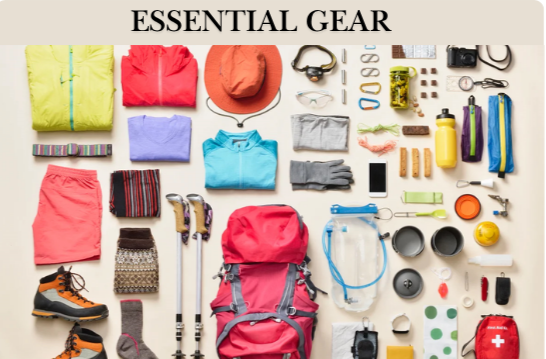
For a successful Larke Peak Climbing expedition, having the right gear is essential. Bring technical equipment like crampons, ice axes, ropes, and harnesses for snow and ice sections, along with sturdy mountaineering boots and gaiters for secure footing. Layered clothing, down jackets, gloves, and thermal wear keep you warm at high altitudes.
Carry a sleeping bag, backpack, trekking poles, and cooking gear for the camps, as well as first aid supplies, high energy food, and waterpurification tools. Do not forget maps, permits, GPS, and communication devices to stay safe and connected. Proper gear ensures your climb is safer, comfortable, and more enjoyable.
Technical Gear
Crampons & Ice Axe: Essential for snow and ice sections.
Ropes & Harness: Required for steep ridges and fixed rope sections.
Helmet: Protects from falling rocks and ice.
Carabiners & Ascenders: For safety and rope climbing sections.
Footwear
Mountaineering Boots: Sturdy boots compatible with crampons.
Gaiters: Keep snow and debris out of your boots.
Thermal Socks: Maintain warmth in freezing conditions.
Lightweight Trekking Shoes (Optional): For approach trails and lower altitudes.
Camping & Essentials
Sleeping Bag: Rated for sub-zero temperatures.
Backpack & Trekking Poles: For daily climbs and carrying gear.
Headlamp & Sunglasses: Important for visibility and sun protection.
Stove & Cooking Equipment: Needed for high camp meals.
Clothing & Insulation
Layered Clothing: Warm and moisture wicking layers for extreme cold.
Down Jacket & Gloves: For summit and high altitude protection.
Thermal Underwear & Socks: Maintain body warmth at high altitudes.
Miscellaneous Items
Maps & GPS Device: For navigation along the route.
Camera & Binoculars: Capture panoramic Himalayan views.
Trekking Permit & Climbing Documents: Essential for expedition access.
Sun Protection: Sunscreen and lip balm for high-altitude sun exposure.
Satellite Phone / Walkie Talkie: For emergency communication in remote areas.
Power Banks & Solar Chargers: Keep devices charged during the expedition.
Altimeter & GPS Watch: Helps track altitude and location.
Safety & Health
First Aid Kit: Handle minor injuries and altitude sickness.
Water Purification: Stay hydrated with safe water.
High-Energy Food: Maintain energy during the climb.
Personal Medications: Include altitude sickness tablets and pain relievers.
Permits and Regulations for Larke Peak Climbing
For Larke Peak Climbing, obtaining the proper permits is mandatory. Climbers need a Larke Peak Climbing Permit issued by the Nepal government, along with a Manaslu Restricted Area Permit to trek through the region. Additionally, a TIMS (Trekkers’ Information Management System) card is required for safety and monitoring purposes.
Climbers must also secure the Manaslu Conservation Area Permit (MCAP) to enter the protected area and, if passing through parts of Annapurna, the Annapurna Conservation Area Permit (ACAP) may be needed. These permits help preserve the natural environment and support local communities.
All expeditions are expected to follow local regulations, carry out waste, respect wildlife, and honor local cultural practices. With proper documentation, climbers can focus fully on the adventure and technical challenges of Larke Peak Climbing while exploring the stunning Manaslu region.
Weather and Temperature Conditions
Larke Peak Climbingtakes place in high altitude conditions, where weather can change rapidly. During the pre-monsoon season (March to May), temperatures are relatively moderate, with daytime temperatures ranging from 5°C to 15°C at base camp, while summit conditions can drop to -15°C to -20°C. Skies are usually clear, providing excellent visibility for climbing.
In the post-monsoon season (September to November), the air is crisp and dry, with daytime base camp temperatures around 4°C to 12°C. Nights are colder, and summit temperatures can reach -20°C or lower. Snowfall is minimal, and weather is generally stable, making it one of the best windows for climbing.
Winter (December to February) brings extreme cold, with base camp temperatures often below -10°C and summit temperatures dropping to -30°C or lower, making climbing very challenging. Monsoon season (June to August) is unsuitable for Larke Peak Climbing due to heavy rain, slippery trails, and avalanche risk.
Climbers must be prepared for rapid weather changes, including strong winds, snowstorms, and sudden temperature drops. Proper gear and clothing are essential to ensure safety and comfort throughout the expedition.
Physical Fitness and Preparation for Larke Peak Climbing
Climbing Larke Peak requires excellent physical fitness and mental preparation. The trek to base camp and the climb itself involve long days of trekking, steep ascents, and technical sections on snow, ice, and rock. Climbers should have strong cardiovascular endurance, core strength, and leg muscles to handle continuous effort at high altitude.
Preparation should include regular trekking, hiking with a weighted backpack, running, and stair climbing in the months leading up to the expedition. Experience with high altitude trekking or mountaineering is highly recommended to reduce the risk of altitude sickness and improve overall confidence.
Mental preparation is equally important. Climbers must be ready to face cold temperatures, sudden weather changes, and physically demanding conditions. A combination of proper training, acclimatization, and technical skills ensures a safer and more enjoyable experience during Larke Peak Climbing.
Support Team: Guides, Sherpas, and Porters for Larke Peak Climbing
A successful Larke Peak Climbing expedition relies on a skilled and experienced support team. Certified mountain guides lead the climb, ensuring safe route navigation, proper acclimatization, and management of technical sections. Sherpas assist with carrying heavy loads, setting up camps, and providing local knowledge of the terrain and weather conditions.
Porters support the team by transporting supplies, food, and equipment between camps, allowing climbers to focus on the technical and physically demanding aspects of the climb. The support team also helps with emergency situations, first aid, and rescue operations if needed.
Having a professional and experienced support team not only increases safety but also enhances the overall climbing experience. Climbers can concentrate on the ascent, enjoy the breathtaking scenery, and gain confidence in tackling the challenges of Larke Peak.
Safety Measures and Emergency Rescue
During Larke Peak Climbing, safety is always the top priority. Climbers follow a careful acclimatization plan to reduce altitude sickness and move cautiously across glaciers, crevasses, and steep slopes. Fixed ropes and well-assessed routes help manage technical challenges safely.
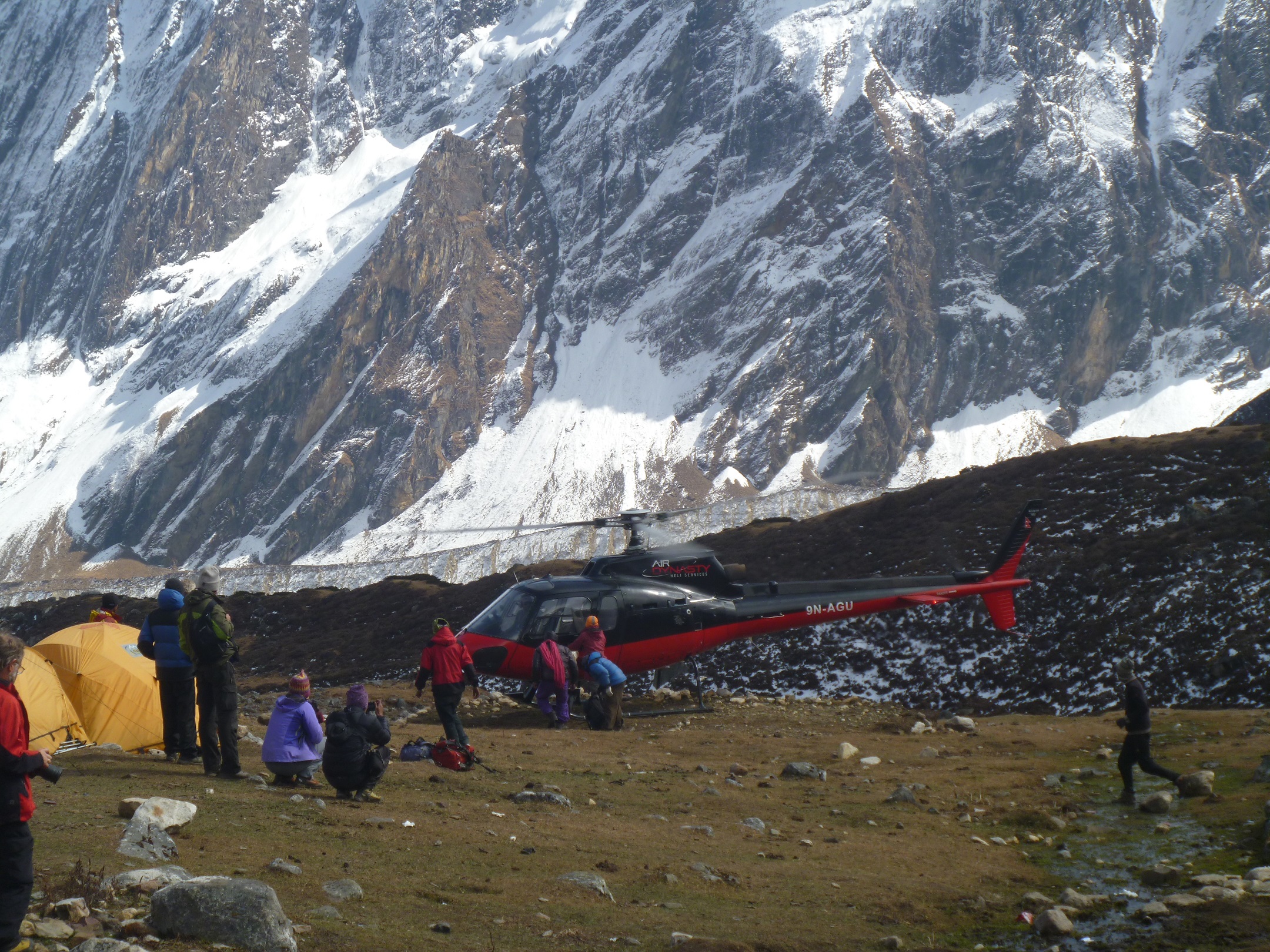
The expedition team is equipped with first aid kits, oxygen, and communication devices to handle emergencies on the mountain. Experienced guides and Sherpas are trained in rescue procedures, and in critical situations, helicopter evacuation is available to transport climbers to medical facilities quickly.
Weather is monitored continuously, and summit attempts can be delayed or canceled if conditions become unsafe. With these precautions, climbers can enjoy the thrill of Larke Peak Climbing while having confidence in professional support and emergency readiness.
Group Joining and Private Expedition Options
Larke Peak Climbing offers flexibility for both solo travelers and groups. Climbers can join a scheduled group expedition, which is ideal for meeting fellow adventurers, sharing costs, and benefiting from a fully supported team of guides and porters. Group expeditions also provide a structured itinerary, including acclimatization days, base and high camp arrangements, and technical support.
For those seeking a personalized experience, private expeditions are available. Private trips allow customized itineraries, personalized guides, and flexible scheduling according to your preferences and pace. This option is perfect for climbers who want more independence, tailored support, or a smaller team.
Whether joining a group or opting for a private expedition, climbers receive full support with permits, logistics, and high altitude safety, ensuring a smooth and enjoyable Larke Peak Climbing experience.
Why Choose Manaslu Guides Nepal for Larke Peak Climbing
At Manaslu Guides Nepal, guiding climbers on Larke Peak is our passion. With years of experience in the Manaslu region and high altitude expeditions, we know the mountains, the weather, and the culture like the back of our hand. Our team of certified guides, skilled Sherpas, and support staff is ready to provide the expertise you need for a safe and successful climb.
We handle all permits, logistics, and safety measures, allowing you to focus completely on the climb. With our technical support, personalized guidance, and on mountain experience, we ensure you are well prepared for the challenges ahead.
We also emphasize cultural respect and environmental responsibility, making sure your expedition is not only adventurous but meaningful. With Manaslu Guides Nepal, your Larke Peak Climbing journey becomes safer, smoother, and unforgettable.
Itinerary
Expand AllCollapse
All
DAY 01
Arrival in Kathmandu (1,300m/4,264ft)
Welcome you and transfer to the hotel.
Hotel check out
Take a rest and relax
Welcome dinner in the evening
Stay overnight in the hotel at Kathmandu.
Breakfast2/3 Stars Hotel
DAY 02
A full day sightseeing tour of Kathmandu, the capital valley
Early morning breakfast.
Half day world heritage cultural tour.
Visit UNESCO World Heritage Sites such as; Hanuman, Dhoka Square, Pashupatinath Temple, Swoyambhunath, Boudhanath Stupa and so on.
A brief explanation of the further trek. (Afternoon trek briefing and trek gear distribution.)
Putting all the essential things in the bag.
Stay overnight at the hotel.
Breakfast / Lunch / Dinner2/3 Stars Hotel3-4 hrs walk
DAY 03
Drive Kathmandu to Soti Khola-6050mtr, 6/7hours
Hotel breakfast and check out
Pick up by our team and transfer to the bus park or by private jeep.
A scenic bus/jeep ride takes us to Sotikhola the starting point of the Manaslu Region.
Soti khola hotel check in
Dinner and overnight stay at the hotel.
Traveler’s note: Soti is a small town and popular for marketing of local people from Northern part. of Gorkha District, Most of the people are Buddhist and Hindu and it is situated in Bank of Bhudhi Gandaki River which is started from Tsum valley and Larke pass.
Breakfast / Lunch / DinnerTea house / Lodge5-6 hrs walk
DAY 04
Soti Khola to Maccha Khola (870m/2,952ft) 5-6 hours.
Hotel breakfast and check out
From here the road takes us to Machhakhola
Dinner and overnight stay at Machhakhola
Traveler’s note: Majority of the way is by bank of the BudhiGandaki river and .You can expect waterfall, monkey watching, rice field, green forest and if the weather permits us we can see our first views of the Ganesh Himal, look out on the road, there is a high chance to see waterfalls as well corssing sevral local sattelments.
Breakfast / Lunch / DinnerTea house / Lodge4-5 hrs walk
DAY 05
Maccha Khola to Jagat (2340m/ 7676ft) 6-7 hours
Breakfast and departure
Today the Ganesh Himal is in clear view
We pass some waterfalls, stone paved ways and a mani wall
Arrival in Jagat
Dinner and overnight stay in Jagat
Traveler’s note: Amazing views of the Ganesh and Shingri Himal await us today, from Jagat the previous restricted trekking area will start along with our adventure!
Breakfast / Lunch / DinnerTea house / Lodge5-6 hrs walk
DAY 06
Jagat trek to Deng (1860 m)
Breakfast and departure
We start the trail by heading gently uphill
Followed by a flat leveled plateau we continue until reaching the river crossing
Cross the suspension bridge over the Bhudi Gandaki and enter Philim village
Climbing uphill further until reaching Ekle Bhatti
Again Cross the suspension bridge and get reach to Deng
Dinner and overnight stay at Deng
Traveler’s note: Today our destination is Deng. where You can try local food with good test . On proceeding further you cross the Siyar Khola bridge and reach a junction where the trail separates to Tsum valley on your right. Like this we walk and reach Deng and we will spend over night there.
Breakfast / Lunch / DinnerTea house / Lodge 5-6 hrs walk
DAY 07
Deng trek to Namrung (2,630m)
Breakfast and departure
Starting by heading down to the riverside
After crossing the bridge an upwards climb takes us to Ranagoan
From here we trek further to Bihi Phedi
The trail splits in to two and we take the right side trail to Ghap
After passing through Ghap village we climb up to Namrung
Dinner and overnight stay at Namrung village
Traveler’s note: Today we get clear views of the Ganesh, Shingri and Kutang Himal.
Breakfast / Lunch / DinnerTea house / Lodge 3-4 hrs walk
DAY 08
Namrung trek to Lho (3,180m) 4 Hours walking.
Breakfast and departure
Permit check post and start the trail towards Lho
Following the path through Lihi Gaon
Continue downwards to Sho Goan
It’s not long before we reach the village of Lho
Lunch ,Dinner and overnight stay in Lho village.
Traveler’s note: The eight highest mountain the world, Mt Manaslu comes in sight today! Today is the first day to see Manaslu and specially the real exciting view of Larke gonna start from today. and also we gonna see most of the locals clad in traditional Tibetan dress while walking in the way to Lho. from this day we will move towards the high quite altitude, So it is recommended to walk walk slowly and check your body signs by bring carful.
Breakfast / Lunch / DinnerTea house / Lodge 8-9 hrs walk
DAY 09
Lho Trek to Samagau (Ryo) (3520 m) 4 hrs walking.
Breakfast and departure
Today is a short trek as we head gradualy up towards Sama (Ryo)
Stopping in Shyala to take in the amazing 360 degree Himalayan view
We head further until reaching Sama (Ryo)
Dinner and overnight stay in Sama (Ryo) Village
Traveler’s note: Sama is localy more known as Samagaon, gaon meaning village. Today incredible views await of the, Manaslu, Himal Chuli, Nadi Peak, Naike Peak, Kutang Himal and the Pangbuche Himal. Shyala is the first town we gonna have today which is one of the best view point of this region to see 360 degree only mountain from town.
Breakfast / Lunch / DinnerTea house / Lodge 8-9 hrs walk
DAY 10
Sama (Ryo) Acclimatization day
Breakfast
A well-deserved acclimatization day is planned today
After breakfast we can take a hike to get more used to the high altitude
Option 1: hike around Birendra Lake and Manaslu Base Camp
Option 2: hike up to the Pungen Gumpa
Dinner and overnight stay in Sama (Ryo)
Traveler’s note:Samagaun is a village development committee in Gorkha District in the Gandaki Zone of northern-central Nepal. At the time of the 1991 Nepal census it had a population of 665 and had 179 houses in the village. Today is an acclimatization day, we can hike around Birendra lake/Manaslu Base camp or Pungen Gumpa etc. discuss with guide which one gonna be best one according your fitness and desire.
Breakfast / Lunch / DinnerTea house / Lodge7-8 hours walk
DAY 11
Samagau-Trek to Samdo (12,713 feet / 3,875 m) 3/4hrs walking.
Breakfast and departure
It’s a relatively short trek today up to Samdo
Due to the high elevation we take it slowly while climbing upwards
By lunch time we reach Samdo village
In the afternoon we can rest or take a hike up to Samdo Peak
Dinner and overnight stay at Samdo
Traveler’s note: the views of Mt Manaslu from Samdo Peak are just incredible is you have the stamina it is worth hiking up there. Samdo is a well-known Tibetan refugee camp. After spending a hole day and 2 night on samagau we start our treks towards the samdo or close to hiking options . samdo has excellent views of Manaslu along with other Himalayan ranges including Simrang, Hiunchuli, Ngadi, Larkye Peak, Cheo, and possibly Kang Guru behind the pass. Here we can many kinds of beautiful mountain birds like the Lophophorus (the national bird of Nepal), .we can see yak, houres, mountain mouse, bluesheep etc.
Breakfast / Lunch / DinnerTea house / Lodge7-8 hrs walk
DAYS 12
Samdo to Dharamsala (14,633 feet / 4,460 m) 4/5hrs walking.
Breakfast and departure
Today we head to the foot of the Larya La, Dharmasala
The trail leads us slowly upwards until reaching our overnight stop
Dinner and overnight stay in Dharmasala
Traveler’s note: tomorrow we face our first pass the Larkya La at 5,160 meter, better take a good night rest and prepare your camera batteries. Did you know that Dharmasala is also known as Larkya Phedi ? After breakfast, today we move through the samdo to Dharamsala you will pass a seasonal Tibetan market called Larke Bazaar beside to the Budi Gandaki Rive. you’ll see many traditional monasteries. While walking towards the dharamsala . we will do shorter hike leaves time for acclimatization and relaxing in the afternoon in dharmsala.
Breakfast / Lunch / DinnerTea house / Lodge
DAYS 13
Dharmasala to Larkya Peak Base Camp 5135m
Morning breakfast.
Start climbling by following our guides who will lead on the peak
Overnight at the Larkya peak II by camping
Breakfast / Lunch / DinnerTea house / Lodge
DAYS 14
Larkya Peak Base Camp to High Camp
Morning breakfast.
Continue climb towards High Camp
Continue our trail by climbing up the hill in the narrow slop and our trek enters a steep rock channel.
Overnight at High Camp
Breakfast / Lunch / DinnerTea house / Lodge
DAYS 15
High Camp to Larkya peak (6249 meter)
Morning breakfast.
Continue climb towards Larkya peak summit.
Continue our trail by climbing up the hill in the narrow slop and our trek enters a steep rock channel.
The way is quite challenging today even though the scenic surrounding compensates it.
Climb rock gully, you will find several short rock steps to climb where you need to follows a ridgeline, which leads you to an exhilarating summit glacier.
If you feel, you need a rope then your guide will fix it to make your trail safe.
Reach the summit with your guide and enjoy the summit.
You will be amazed to find yourself on the summit of Island peak and view splendid mountains view from the peak.
Explore and enjoy the summit views and capturing the images.
Descend to the High Camp
Enjoy and celebrate our successful Larkya Peak climbing.
Overnight by camping
Breakfast / Lunch / DinnerTea house / Lodge
DAYS 16
High Camp to Larkya peak Base Camp
Morning breakfast.
Continue trek towards Larkya peak Base Camp
Continue easy trail as we descend to the lower altitudes.
Overnight at Larkya peak Base Camp.
Breakfast / Lunch / DinnerTea house / Lodge
DAYS 17
Larkya peak Base Camp to Bhimtang
Morning breakfast.
Continue trek and retrace our steps down to Bhimtang
Cross the beautiful rhododendron and juniper trees.
Encounter the wildlife such as mountain goats, colorful pheasants, snow leopards, and many more.
Finally, reach to Bhimtang
Overnight in Bhimtang Tea house
Breakfast / Lunch / DinnerTea house / Lodge
DAYS 18
Bimthang to Tilije ( 2,300 m/7,546 feet ) 5/5hrs. walking
Breakfast and departure
We hike downhill for the most part of the day
After a good 4 hours we reach the village of Ghoa
From here we continue downwards to Tilje
Dinner and overnight stay in Tilje village
Traveler’s note: waking up early today allows for an amazing sunrise view from the teahouse. After passing the top peek of the world we are in the bimthang by having and we are starting our next journey towards the tilije .tilije is the beautiful village with beautiful people of there local culture . In tilije we can have good hotels and we can find free wi-fie after crossing the mountain.
Breakfast / Lunch / DinnerTea house / Lodge
DAYS 19
(Tilije trek to Dharapani and drive to Besisahar by jeep. 6/7 hours.
Breakfast and departure
Following the trail down to Dharapani.
The path leads us through pine forests and several small villages
Lunch in Dharapani arrange jeep to Besisahar.
After Lunch Drive to Besisahar.
Traveler’s note: This is our last day of massive Manaslu circuit trek, after arrive Besisahar by 4 hours driving, get into the town, good food and drinks then plan for the further days.
Breakfast / Lunch / DinnerTea house / Lodge
DAYS 20
Drive to Kathmandu or Pokhara by Tourist Bus
Breakfast and departure
Drive to your destination:
Traveler’s note: Guide and porters will drive back to kathmandu, if our clients would have time we recommend them to spend few nights in Pokhara, which is a beautiful touristic town of Nepal. so we transfer to pokhara or if no time then together drive back to kathamndu.
If you’re interested in extending your adventure in Nepal, we offer a variety of exciting options. Discover the serene beauty of Pokhara, explore the wildlife in Chitwan National Park, or immerse yourself in the rich history with our Kathmandu Cultural Heritage Tours. For those looking for international experiences, we also offer tours to Tibet, India, and Bhutan.
Our standard itinerary may vary due to unforeseen circumstances like flight delays, weather changes, or health concerns. We advise arriving a day early to rest and prepare, with extra buffer days for international flights. The itinerary serves as a guideline and can be adjusted based on client preferences, fitness levels, and ground realities. If you're not satisfied or have an alternative plan please feel free to discuss it with us By Clicking :- ASK QUESTION or CUSTOMIZE YOUR TRIP.
Airport pick up and drop off by Car, jeep, Hi-ace or Bus. Depends on the number of arrives.
Complimentary welcome or farewell dinner according to the suitability of our client’s time.
Beginning two nights stay on arrival in Kathmandu in tourist standard hotel with breakfast included (twin share basis)
Kathmandu to Soti khola (trekking starting point) transfer by Bus, and way back from Soti khola to Kathmandu
All necessary trekking and restricted area permit & fees, (Entry Permit, Manaslu conservation area permit, Manaslu Restricted area special permit and TIMs cards).
OPTIONAL: Three meals a day during the trek (If of required, we provide meal during the trekking)
OPTIONAL: All accommodation during trek (If of required we arrange all accommodation)
An experienced, English-speaking, government-licensed, first aid trained, Manaslu special trekking guide and assistant guide (5 trekkers: 1 assistant guide)
An expert Manaslu local porter (2 trekkers: 1 porter)
Duffel bag, (to be returned after trip completion), complementary trekking maps. If needed down jacket and sleeping bag will be provided in rent.
Staff costs including their salary, insurance, equipment, transport, food and accommodation.
Rescue arrangements if necessary.
Basic First-aid kit (carried by your trekking guide)
All government and local taxes for Trekking, Agency service charge and government tax/vat.
Achievement Certificate
Cost Excludes
International airfare and Nepal visa fee.
Lunch and Dinner in Kathmandu
Extra night accommodation in Kathmandu because of early arrival, late departure, early return from mountain (due to any reason) than in the scheduled itinerary
Meal and accommodations in mountain. (can be arranged by company as per the package agreement )
Personal insurance which covers medical, emergency evacuation, loss or theft of property.
Personal gears and equipment.
Personal expenses such as laundry, hot showers, battery charging, Wifi, etc
Entry fees and costs in sightseeing (temples, monasteries, etc)
Tips and gratitude provided to guide and porter.
No fixed departures for this trek yet. Contact us for a private trek.
Fixed Departure Note
Join our group trek with a fixed departure date, or choose your own date with our Private Trip option, which offers daily availability.
Guaranteed: The trip will definitely run on this date. Available: The trip will run once the minimum group size is met. Limited: Only a few seats left—book soon! Closed: No seats left for this group. Please consider a private trip.
Physically fit person can attempt. There are no any limitation or obligation to climb a peak
I have never climbed before. Can I go for peak climbing?
Yes if you are physically fit, you can climb a peak.
Do I need climbing permit?
Climbing permit are mandatory during the peak climbing. It is the permission to enter into restricted area.
Who will lead me during climbing?
Manaslu trek is restricted area trek where you need a special permit from Nepal government immigration department. Climbing expert and porters are very important during your Manaslu expedition. Climbing expert knows the different trekking trails. Not only that Climbing expert explains about community and cultures their lifestyles. The Climbing expert will book your accommodation and everything in advance even during high season. You will have good communication with local people with Climbing expert. Before climbing mountain you will be trained and during climbing period Climbing expert will take a lead on you.
Which is the best season for peak climbing?
During the pre-monsoon and post monsoon will be the best season to trek. The months of pre-monsoon are March, April, July and post monsoon are September, October, November. In December, January, February the weather might get a little bit colder and in June, July, August rain might cause a problem. If the travelers want to avoid the crowd and enjoy the trip privately then our guides can assist through the alternative trials.
Do I need to join in a climbing group?
Joining a group is not mandatory but climbing solo will be unsafe for you so we prefer you to hire a guide and porter, who can guide you in the mountain.
What will be the food and accommodation?
We’ll be serving traditional trekking food such as dal bhat (the Nepali national dish of rice, dal and vegetables), pasta, soups, potatoes, bread, fruits, eggs. We’ll try where possible to use fresh local goods. We’ll serve portions big enough to match your calorific needs. If you have special dietary requirements, please let us know. For the overnight stay we prefer tea house and camping.
How much time is generally required for trekking peak?
Generally, time for summit depends upon the peak elevation and weather condition of the mountain.
How difficult are the trekking peaks?
Trekking peaks is a difficult task. Climbers risk their life and summit the mountain, during the period of climbing the mountain there are chances of being sick, weather condition may be challenging, the route may be challenging, adjusting in food and so on.
Is there any age limit for trekking Peaks Climbing?
The climber should be minimum 16 years but there is no any age limit for peak climbing in Nepal
What are the sources of drinking water supply during Peak Climbing?
Bottled filter water are available in the trekking trial and in the camp kitchen hot boiled water are available. Bottled filter water are carried during the peak climbing.
Where do we eat our meals?
During the stay in tea house, tea house will serve you with the menu and during camping, representative from our company will serve you.
What problems can arise on altitude?
Altitude sickness is also known as mountain sickness. Mountain sickness is the main problem for any mountain climbers or trekkers. Sometime trekkers might have altitude sickness during Larke Peak Climbing. There are different types of sickness like-
AMS – Acute Mountain sickness – AMS is a very common sickness like a hangover, dizziness, muscle ache, nausea, headache vomiting etc
HAPE – High Altitude Pulmonary Edema – HAPE direct impact on lungs it’s fluid in the lungs which are dangerous for breathing.
HACE- High Altitude Cerebral Edema – HACE it’s the different form of altitude sickness its fluid in the brains
Thus, HAPE and HACE are the main dangerous and life-threatening form of mountain sickness. Patient has to treat on time if not treated on time if late they may die. Whereas AMS is normal mountain sickness then HACE and HAPE.
What are the tips for avoiding altitude sickness?
There are some tips to which our company would like to guide for the travelers to avoid altitude sickness; such as:
Avoiding the drinks which contains the caffeine added, smoking and alcohol
Travel slowly concerning your health
Drinking more amount of water i.e. minimum 3-4 liters per day
Being familiarized with the environment and having a healthy foods and beverage
Continuing with Diamox if needed, it is carried for the backup
We prefer Garlic soups to sustain the environment
Do I need travel insurance?
Yes, The travelers should have the international insurance which should cover the emergency evacuation, medical conditions and accidental cases. In case of insurance the travelers are need to pay here in Nepal first and then claim to their insurance company later.
Is there communication facilities on the mountain?
For the communication, mobile phones are used all over the Nepal and the facility of internet are available in the mobile phones and tea houses as well.
You may like this
Similar trip on Region
You may also like to explore similar packages from same region...explore more trips


 Moderate
 USD $830 - 1060