The Manaslu Trek via the alternative route is physically demanding, lasting about 16 days with 5 to 8 hours of daily walking on steep, rocky trails and high passes.
Starts
Kathmandu
Ends
Kathmandu/Pokhara
Group Size
Min-2Pax
Best Season
March-May
Sept.-Dec.
TRIP HIGHLIGHTS
Encounter diverse terrain, including terraced fields, rhododendron forests, and high alpine passes.
Beautiful Monasteries high altitude lakes, glaciers sustaining views of mountains.
Unspoiled and non-commercialized trekking route.
Stunning backdrop of Mount Manaslu, standing at 8,163 meters in the journey.
Tsum Valley, renowned for its ancient Buddhist monasteries, traditional villages, and unique culture.
Offers breathtaking views of snow-capped mountains, lush green valleys, and remote landscapes.
TRIP OVERVIEW
Manaslu Circuit Trek via Alternative Route (Barpak & Laprak Trail)
The Manaslu Circuit Trek via Alternative Route is a rewarding and less-traveled approach to the classic Manaslu trail, beginning with a scenic drive from Kathmandu to Barpak Village, followed by a cultural trek through Laprak Village before rejoining the main Manaslu Circuit at Khorlabesi and Jagat. This alternative route is ideal for trekkers seeking authentic village life, fewer crowds, and a deeper cultural experience before entering the restricted Manaslu region.
Barpak and Laprak are traditional Gurung villages, known for their stone houses, terraced fields, and warm hospitality. Trekking through these villages allows you to experience rural Nepal at its best walking through forests, farmlands, and mountain ridges with magnificent views of Ganesh Himal, Manaslu range, and surrounding hills. Compared to the standard road-based approach, this route offers a more peaceful and immersive start to the Manaslu Circuit.
After Laprak Village, the trail gradually descends to Khorlabesi, where it connects with the classic Manaslu Circuit Trek route, continuing onward to Jagat, the official checkpoint of the Manaslu Conservation Area. From here, the journey follows the traditional Manaslu trail through iconic villages such as Namrung, Lho, Samagaun, and Bhimthang, before crossing the spectacular Larkya La Pass (5,160 m).
Table of Contents
Choosing the Manaslu Circuit via Barpak and Laprak not only avoids dusty roads but also adds cultural depth, scenic diversity, and off-the-beaten-path adventure to your trek. This route is perfect for trekkers who want to experience the true spirit of the Himalayas combining classic high-mountain trekking with untouched villages and authentic local life.
The Manaslu Circuit Trek via Alternative Route is an excellent option for trekkers who want to experience the raw beauty of the Manaslu region while avoiding crowds, road sections, or difficult weather-affected trails. This alternative route offers a more immersive Himalayan experience, combining remote villages, untouched landscapes, and authentic Tibetan-influenced culture, while still connecting with the classic Manaslu Circuit where appropriate.
At Manaslu Guides Nepal, we carefully design alternative routes to improve safety, flexibility, and overall trekking enjoyment especially important in the high mountain environment of Nepal.
The Manaslu Circuit Trek via Alternative Route offers a quieter and more authentic experience of the Manaslu region, away from the newly built roads. This route follows traditional trails through remote villages, lush valleys, and pristine landscapes, allowing trekkers to enjoy the natural beauty and cultural richness of Manaslu with less crowd and more adventure.
For those seeking a trekking journey that seamlessly blends untouched natural splendor, rich cultural heritage, and the excitement of exploring a less frequented Himalayan path, the Manaslu Circuit Trek is an exceptional choice. Situated in the heart of Nepal, this trek provides a harmonious mix of adventure and peace, guiding travelers through rugged mountain terrains, traditional villages, and breathtaking views dominated by the imposing Mount Manaslu, the world’s eights highest peak.
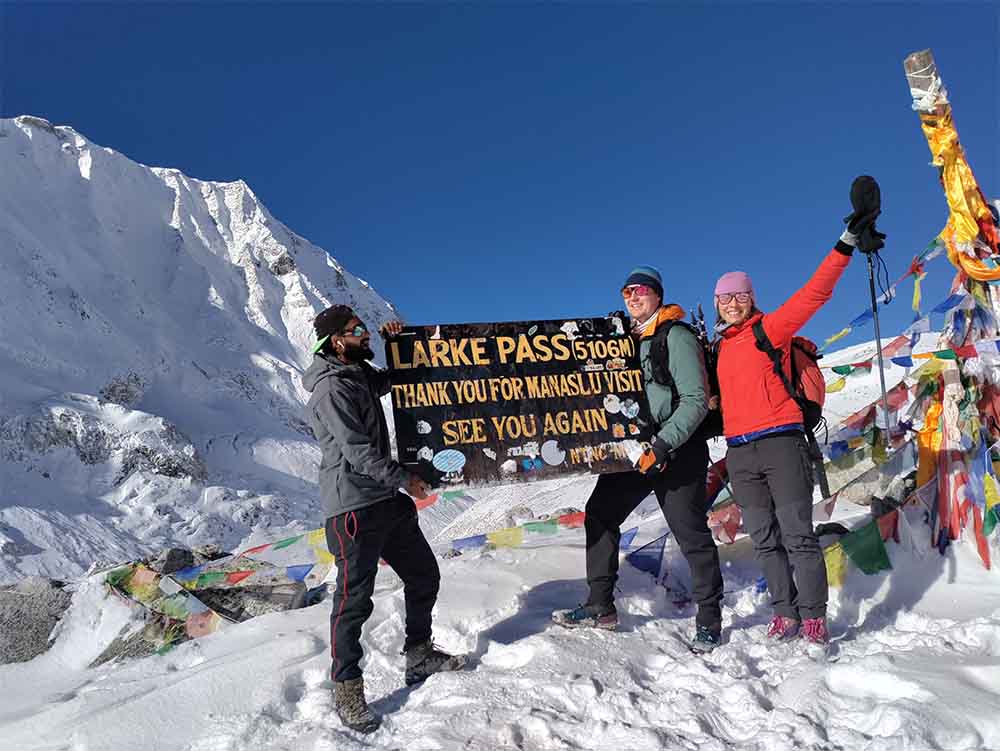
This route covers about 177 kilometers and passes through varied landscapes from lush green forests and terraced fields to high mountain passes and dry, Tibetan plateau like areas. Trekkers experience beautiful villages like Barpak, Laprak, Namrung, Samagaun and Samdo, where Tibetan Buddhist culture is strong, with colorful prayer flags and ancient monasteries. The Manaslu Circuit Trek also includes the famous Larke La Pass at 5,106 meters, offering some of the most breathtaking panoramic mountain views.
Along the way, you will see towering peaks like Himalchuli (7,893 meters / 25,896 feet), Ngadi Chuli (7,871 meters / 25,823 feet), and Ganesh Himal (7,429 meters / 24,373 feet), and witness spectacular natural features such as waterfalls, glaciers, and glacial lakes. The Budhi Gandaki River carves deep gorges that the trail often follows, adding to the dramatic scenery.
Compared to busier trails like Everest Base Camp or Annapurna Circuit, Manaslu Circuit provides a quieter and more authentic experience, allowing trekkers to immerse themselves in the serene beauty and rich culture of the region. It is an opportunity to explore Nepal’s hidden Himalayan gem, offering both challenge and reward in equal measure.
The Manaslu Circuit Trek is more than just a physical adventure; it is an opportunity to explore Nepal’s hidden Himalayan gem, offering both challenge and reward in equal measure. From the initial lush lowlands through diverse climatic zones up to the high alpine areas and down again, trekkers gain a profound appreciation of the natural and cultural tapestry that defines this extraordinary part of the world.
Whether you are an experienced trekker searching for fresh challenges or a nature enthusiast longing for tranquility in untouched landscapes, the Manaslu Circuit Trek offers an unforgettable adventure deep within the Himalayas. Each step uncovers a new mountain secret, with Manaslu Guides Nepal by your side throughout the journey.
Why Choose Manaslu Circuit Trek Via Alternative Route ?
The Manaslu region is remote and wild, and conditions can change quickly due to weather, landslides, road construction, or local situations. Choosing an alternative trek route provides several advantages:
Avoid jeep roads and newly constructed motor tracks
Reduce walking time on exposed or landslide-prone sections
Enjoy quieter trails with fewer trekkers
Explore lesser-known villages and monasteries
Increase flexibility in case of weather or trail disruptions
Alternative routes are especially valuable during monsoon shoulder seasons and early winter when trail conditions may vary.
Barpak Village: The Start of Manaslu Circuit Trek Via Alternative Route
Most trekkers start their regular Manaslu circuit trek journey from Machhakhola, a small village that serves as the official gateway to the Manaslu region. From there, the classical Manaslu circuit Trek trail follows the Budhi Gandaki River and passes through Tatopani-Dovan, a small village known for its terraced fields and friendly people. However this Manaslu Circuit Trek Via Alternative Route Starts from a beautiful Barpak Village, which is a scenic alternative that avoids some road sections and offers deeper insight into traditional Gurung life. Highlights include:
Authentic village stays
Beautiful views of Manaslu and Ganesh Himal
Peaceful trails far from busy trekking corridors
This route is ideal for trekkers looking for cultural immersion combined with moderate trekking difficulty.
The Manaslu Circuit Trek Via Alternative Route offers a unique, flexible, and culturally rich trekking experience in one of Nepal’s most spectacular regions. By choosing alternative trails, trekkers can avoid crowds, adapt to changing conditions, and discover hidden gems of the Manaslu Himalaya. For a safe, well-organized, and truly local experience, trek with Manaslu Guides Nepal, your trusted partner in the Manaslu region.
Cultural Encounters and Villages
One of the best parts of the Manaslu Circuit Trekis the chance to experience the local culture. The villages here have kept their old customs, languages, and ways of living for many years. As you walk, you will see locals living in stone and wood houses, often decorated with colorful prayer flags that move in the mountain wind.
Many people here follow Buddhism, and you can visit old monasteries and stupas, which are important spiritual places. If you visit during a festival, you might see lively dances, music, and rituals that celebrate the seasons and religious beliefs.
People in the Manaslu region are known for their warm hospitality. The tea houses and lodges are usually run by families, who serve traditional Nepali meals like Dal Dhat (lentils and rice), momo (dumplings), and warm butter tea. Sharing a meal or tea with your hosts often leads to friendly talks and better understanding of the simple and strong mountain life.
The Challenge and Beauty of the High Passes
The hardest and most exciting part of the Manaslu Circuit Trek is crossing Larke Pass, which is very high about 5,160 meters ( 16,929 feet) above sea level. This part of the Manaslu Circuit Trek really tests your strength, patience, and how well your body can handle the high altitude. To get to the pass, you will climb steep slopes and sometimes walk on icy or rocky ground. Even though it can be tiring and tough, the amazing views of sow covered mountains make it all worth it.
After you cross Larke Pass, you will be rewarded with stunning views of glacial valleys, rugged mountain ridges, and towering peaks like Manaslu (8,163 meters / 26,781 feet), Himalchuli (7,893 meters / 25,896 feet), and Ngadi Chuli (7,871 meters / 25,823 feet). The trail then descends into the Marsyangdi Valley, where green forests and terraced fields reappear. This part of the Manaslu Circuit Trek feels easier and more peaceful, offering a relaxing change after the tough climb as you continue your journey.
How to Get Ready for Alternative Manaslu Circuit Trek ?
Getting ready for the Manaslu Circuit Trek is very important to enjoy the journey and stay safe. First, you need to be physically fit. This means doing exercises like walking, running, cycling, or swimming to build your strength and stamina. It helps to do leg workouts, stretching, and practice hikes carrying a backpack to prepare your body for the long days of trekking.
Altitude is a big challenge on this trek, especially when crossing Larke Pass at 5,160 meters. To avoid altitude sickness, plan rest days to let your body adjust. Drink plenty of water, avoid alcohol, and move slowly during the trek. Mental preparation is also needed to stay motivated and handle tough moments.
You must get special permits for the trek because the area is protected. Traveling with an experienced guide is very helpful for navigation and safety.
Packing the right gear is key. Carry warm clothes, sturdy boots, a sleeping bag, and essential items like a first aid kit and a water filter. Light but smart packing makes trekking easier.
Overall, preparing your body, mind, and gear, respecting the local environment and culture, and taking your time with acclimatization will help make the Manaslu Circuit Treka safe and unforgettable adventure.
Essential Gear and Packing List for the Manaslu Circuit Trek
For the Manaslu Circuit Trek, having the right gear is essential for comfort, safety, and a successful journey through its varied terrain and weather conditions. Here is a comprehensive list of essential equipment and clothing to prepare for the trek:
Clothing
Base Layers: Moisture wicking thermal tops and pants to keep you dry and warm.
Mid Layers: Fleece jackets or wool pullovers for insulation during cold periods.
Outer Layers: Waterproof and windproof jackets and pants that are breathable to protect against rain, snow, and wind.
Down Jacket: A warm insulated jacket for high altitudes and cold nights.
Trekking Shirts and Pants: Lightweight, quick-drying, and breathable for daytime trekking.
Rain Gear: Reliable raincoat or poncho to stay dry during unexpected showers.
Underwear and Socks: Moisture-wicking and quick-drying underwear; trekking socks and warm thermal socks.
Headwear: Warm woolen hat, sun hat for protection, and a buff or neck gaiter to shield against cold wind and dust. Gloves: Inner thermal gloves plus insulated, waterproof outer gloves for cold and snow.
Essential Gear
Sleeping Bag: Rated for temperatures down to -10°C or lower for cold nights.
Trekking Poles: To reduce strain on knees and help maintain balance on uneven trails.
Headlamp with Extra Batteries: Crucial for early starts and trekking after sunset.
Water Bottles and Purification: Hydration reservoirs or bottles and water purification tablets or filters.
Sunglasses: UV protection to guard against intense sunlight and snow glare.
Sunblock and Lip Balm: High SPF protection to prevent sunburn at high altitudes.
First Aid Kit: Basic supplies to handle minor injuries and altitude related issues.
Personal Hygiene: Quick-dry towel, toothbrush, toothpaste, biodegradable soap, and wet wipes.
Footwear
Trekking Boots: Well-broken-in, waterproof, durable boots with good ankle support for rugged terrain.
Camp Shoes or Trainers: Comfortable shoes for resting after long trekking days.
Gaiters: Useful to keep out snow, mud, and rocks in slippery or muddy sections.
Socks: Layers of trekking socks and thermal socks to keep feet warm and dry.
Backpacks and Bags
Duffle Bag (90 to 100L): Large bag for porters to carry heavy and bulky items not needed on the trail.
Daypack (30 to 40L): Comfortable for daily use to carry water, snacks, camera, and extra clothing.
Rain Cover: To protect your backpack from moisture.
Personal Care and Hygiene
Quick-Dry Towel: Lightweight towel, fast drying and easy to carry on trekking trips.
Toothbrush and Toothpaste: Basic oral hygiene essentials for refreshing clean teeth.
Water Purification: Tablets or filters to keep water safe for drinking on trail.
Biodegradable Soap and Shampoo: Eco-friendly cleansing supplies for hygiene on trek.
Hand Sanitizer: Keeps hands clean when water isn’t available during trekking.
Sanitary Products: Necessary feminine hygiene items for comfort on trek.
Basic First Aid Kit: Essentials for treating minor injuries and altitude issues.
Electronic Accessories: Power banks and chargers for keeping devices charged.
Other Helpful Items
Small Locks: To secure bags and belongings.
Camera and Chargers: To capture memories.
Power Bank: For charging electronics when electricity is limited.
Snacks and Energy Bars: For quick energy boosts during long trekking days.
Trekking Poles: To improve balance, reduce knee strain, and assist with difficult terrain.
Dry Bags or Compression Sacks: To keep gear organized and protected from moisture.
Emergency Blanket: Lightweight, compact for extra warmth in emergencies.
Notebook and Pen: For journaling or important notes during the trek.
Best Time to Trek Manaslu: Spring and Autumn
The Manaslu Circuit Trek is best enjoyed during the spring and autumn seasons when the weather is stable, skies are clear, and mountain views are stunning. These seasons offer the most comfortable temperatures for trekking and allow hikers to experience the beauty of the region at its best.
Spring Season
Spring (March to May) is a wonderful time to trek the Manaslu Circuit. During this season, the weather is mild and pleasant, making for comfortable hiking. The trails are filled with blossoming flowers, especially bright red and pink rhododendrons, creating a colorful and lively landscape. The skies are often clear, offering spectacular views of the snow capped mountains. This season is less crowded than autumn, giving a peaceful and calm trekking experience. Wildlife also becomes more active as the snow melts, and local festivals like Holi add a special cultural touch to the trek.
Autumn Season
Autumn (September to November) is the most popular season for the Manaslu Circuit trek. The weather during this time is cool, dry, and stable with bright blue skies. This means trekkers can enjoy stunning visibility of the majestic Himalayan peaks. The air feels fresh and crisp, making long days on the trail comfortable. Autumn is also the harvest season, so you will see beautiful golden fields and vibrant local celebrations. The trail is busier than in spring but offers some of the best conditions for photography and overall trekking enjoyment.
Hiring a Porter to Enhances Your Manaslu Trek
Porters play an important role on the Manaslu Circuit Trek by carrying heavy backpacks of up to 20-25 kg, which lightens your load and reduces physical strain. This is especially helpful during tough sections like steep climbs and crossing the high Larkya La Pass, allowing you to save energy and focus on enjoying the trek. Beyond carrying gear, porters often share valuable local knowledge about the culture, traditions, and landmarks, enriching your overall experience.
Hiring a porter also benefits the local economy because many porters come from nearby mountain villages, and their work supports their families while promoting sustainable tourism. Choosing a trained and insured porter increases safety and comfort. Good porters are physically fit, experienced with high-altitude trekking, and know basic first aid. They communicate well enough to understand your needs and ensure your gear reaches each stop safely.
Having a porter means less fatigue, more time to admire the beautiful Himalayan scenery, and a deeper connection to the local culture. It makes the difficult trek easier and far more enjoyable. Paying porters fairly and tipping them generously once the trek is over is an important part of respecting their hard work and contribution to your adventure.
Accommodation During the Manaslu Trek
Welcoming tea house dining areas where trekkers gather to share stories and enjoy local flavors.
When trekking the Manaslu Circuit Trek, accommodation is mostly provided bytea houses scattered along the trail. These are simple lodges run by local families that offer basic but comfortable rooms and meals to trekkers. Tea houses are your main resting spots where you can sleep, eat, recharge electronic devices, and enjoy warm hospitality.
At lower altitude villages like Soti Khola and Machha Khola, accommodations may include guesthouses with amenities such as hot showers, Wi Fi, and private rooms. As you progress further, places like Jagat offer tea houses where trekkers can register permits and rest before continuing.
Higher up at scenic stops such as Namrung, the options grow more developed, including resorts offering more varied meals and hot showers, which are important for acclimatization.
Rooms typically have basic furniture: a mattress, blanket, and pillow. Bathrooms are often shared and simple, sometimes with squat toilets. Heating in rooms is generally unavailable, though dining areas often have stoves for warmth.
During busy trekking seasons like autumn and spring, tea houses can fill up quickly, so arriving early or booking ahead is advised. Camping is also an option for adventurers who want to camp out in nature, though it requires carrying or hiring gear and following environmental care principles.
Meals and Munchies on the Manaslu Trek
Good food is just as important as a well planned route on the Manaslu Circuit Trek. As you pass through remote mountain villages, cozy teahouses become your dining spots, serving nourishing, hearty meals to keep your energy up for the demanding days ahead. Breakfast often features warm Tibetan bread with honey or peanut butter, eggs cooked to your liking, porridge, and sometimes pancakes. It’s smart to order breakfast the night before so it’s ready when you wake.
Lunch and dinner commonly center around Dal Bhat, a wholesome Nepalese combo of rice, lentil soup, and vegetable curry that is refillable as much as you want. Other popular dishes include momo(dumplings), thukpa (noodle soup), chowmein, fried rice, and simple vegetable soups. While meat is usually available at lower elevations, it becomes scarce and costly higher up, so it’s best avoided to prevent stomach issues.
Ultimately, the right food provides the vital energy your body needs for the rough terrain and altitude. Enjoying warm, wholesome meals and staying hydrated will help make your trek comfortable and successful.
Is Solo Travel Allowed on the Manaslu Trek?
No, solo trekking is not allowed on the Manaslu Trek because the trail passes through a restricted area. The Nepalese government requires all trekkers to have a special permit, which is only issued to groups of at least two people accompanied by a licensed guide. This rule is in place to ensure safety due to the challenging terrain, remote location, and changing weather conditions.
Hiring a registered guide not only helps trekkers navigate safely but also supports local communities and promotes sustainable tourism. While solo trekking is not permitted, some companies offer “ghost trekker” services to virtually meet the two-person group requirement allowing you to trek with a guide but with more privacy.
Why Choose Manaslu Guides Nepal for the Manaslu Circuit Trek?
Choosing Manaslu Guides Nepal ensures a safe, smooth, and authentic trekking experience on the Manaslu Circuit. The Nepal government requires all trekkers in this restricted area to be accompanied by a licensed guide, and Manaslu Guides Nepal provides highly trained, experienced local guides who are officially certified. Our guides possess deep knowledge of the region’s cultural heritage, geography, and trekking routes in Manaslu Region. Which helps you navigate difficult trails with confidence.
Manaslu Guides Nepal also assists with all necessary permits and paperwork, including the Special Restricted Area Permit and conservation area passes, making your preparation hassle-free. Their team is known for friendly, personalized service that keeps trekkers comfortable, safe, and well-informed. With their expert support, you can fully enjoy the breathtaking Himalayan views, rich cultural encounters, and challenging adventures of the Manaslu Circuit without worry.
Hiring a guide through this trusted agency also contributes positively to the local communities by providing fair wages and promoting sustainable tourism. Overall, Manaslu Guides Nepal is your reliable partner for a memorable and responsible trekking journey in one of Nepal’s most spectacular and
Permits requires for this Alternative Manaslu Circuit Trek
The permits for the Alternative Manaslu Circuit Trekare essential and mandatory for every trekker. Without these permits, trekking in the region is not allowed, as Manaslu is a restricted area. Trekkers must obtain the Manaslu Restricted Area Permit (RAP), Manaslu Conservation Area Permit (MCAP), and Annapurna Conservation Area Permit (ACAP) through registered agencies. The permits ensure controlled tourism, preserve the environment, and protect cultural heritage. You must trek in a group with a licensed guide and carry the permits to show at checkpoints along the route. No trekker can enter without them.
Manaslu Restricted Area Permit (RAP)
The Section from Jagat to Dharmashala, in this trek is Restricted area, you need a special permit called the Manaslu Restricted Area Permit (RAP). This permit is required because the Manaslu region is a restricted area to protect its natural beauty and regulate tourism. The permit costs around $100 for the first seven days during the busy trekking months of September to November, and USD 75 during the off season. You cannot get this permit on your own; it must be arranged through a registered trekking agency. Also, the group must have at least two trekkers and a licensed guide.
Manaslu Conservation Area Permit (MCAP)
Along with the RAP, trekkers must have the Manaslu Conservation Area Permit (MCAP). This helps protect the environment and wildlife in the region. Like the RAP, this permit has to be organized by an authorized trekking company.
Annapurna Conservation Area Permit (ACAP)
Part of the trek passes through the Annapurna Conservation Area. For this section, you need the ACAP permit. This is necessary even though you will only be trekking here for a short time. It helps ensure the conservation of the area’s biodiversity.
Additional Permits
Tsum Valley Restricted Permit:
This Tsum Valley Restricted Permit Needed only if you plan to include the Tsum Valley in your trek.
Chumnubri Rural Municipality Permit:
A local permit is required for parts of the Manaslu region and Tsum Valley trek.
Important Things to Know
You can not apply for these permits by yourself; a registered trekking agency like Manaslu Guides Nepal must handle the process. You also need to be in a group with at least one licensed local guide. Make sure to carry all your permits with you, as you will be asked to show them at various checkpoints along the route, such as in Jagat, Philim, Namrung, Samagaon, and Dharpani. Also, you will need photocopies of your passport and passport sized photos for the application.
Manaslu Guides Nepal is known for arranging permits and providing experienced guides to ensure trekkers have a well organized and safe journey on the Manaslu Circuit Trek.
Manaslu Circuit Trek Cost: What to Expect and How to Budget
The Manaslu Circuit Trek costs typically range between $900 and $1,600 for a 13 to 16 day journey. This budget includes most necessities like permits, guide fees, accommodation, meals, and ground transport. Prices depend largely on the trekking season, group size, and comfort preferences.
Permits and Legal Requirements
The Manaslu region is a restricted area, so trekkers must obtain special permits to enter. These include the Manaslu Restricted Area Permit (MRAP), Annapurna Conservation Area Permit (ACAP), and Manaslu Conservation Area Permit (MCAP). The permit fees vary from $75 to $160 depending on the season and length of stay.
Trekkers must be in groups of at least two and must hire a licensed local guide, as independent trekking is not allowed. Permits can only be obtained through registered trekking agencies, not freelance guides. This system helps protect the fragile environment and rich culture of Manaslu. The permits are checked at several checkpoints throughout the trek.
Guide and Porter Fees
Hiring a licensed guide for the Manaslu Circuit Trek is mandatory and usually costs between $250 and $400 for the entire trek. The guide not only ensures safety and navigation but also enriches the experience by sharing local culture and knowledge. Hiring a porter is optional but highly recommended if you want to carry less weight.
Porter fees typically range from $15 to $25 per day. Porters help lighten your load by carrying your backpack and other heavy items, making the trek less physically demanding. It is advised to arrange your guide and porter through a registered trekking agency to comply with local regulations and ensure a smooth trek. Manaslu Guides Nepal is a well known company providing experienced local guides and porters for this trek.
Accommodation and Meals
On the Manaslu Circuit Trek, accommodation is mainly in basic teahouses run by local families. These teahouses offer twin rooms with simple beds, blankets, and shared bathrooms. Daily costs for lodging and meals typically range from $20 to $35, with prices rising slightly at higher altitudes and more remote villages. Many teahouses provide a communal dining area where you can enjoy traditional Nepali dishes like dal bhat, as well as some international options.
Some teahouses have basic amenities such as hot showers and Wi Fi, usually available for an extra charge. While the accommodations are modest, they offer a warm and welcoming atmosphere where trekkers can relax after a long day on the trail.
Camping remains an alternative option for those seeking a more adventurous experience, but requires carrying extra gear and a support crew. Overall, the teahouse system ensures a comfortable and culturally immersive trekking experience throughout the Manaslu Circuit.
Transportation Costs
Getting to the start of the Manaslu Circuit Trek usually involves traveling from Kathmandu to Machha Khola or Soti Khola, the main trailheads. Taking a local bus is the most budget-friendly option, costing between $10 to $20 per person for the 6 to 9 hour journey. If you prefer more comfort and faster travel, hiring a private jeep is also possible but much more expensive, typically costing $230 to$250 per vehicle.
After the trek, transportation back to Kathmandu from the endpoint, such as Dharapani or Besisahar, involves local jeeps costing about $20 to $25 and then a bus costing $10 to $15. Private jeep rides for the return journey can cost $300 or more, offering a more comfortable and flexible option. Planning transportation costs well can help maintain your overall trek budget effectively.
Equipment Rental and Miscellaneous Expenses
If you do not have your own trekking gear, you can rent equipment like sleeping bags, down jackets, and trekking poles in Kathmandu, usually costing between $2 and $7 per day. Travel insurance is another essential expense, typically ranging from $30 to $150 depending on coverage.
During the trek, small costs add up, including tips for guides and porters, which are generally 10 to 15% of their total fees. Additionally, you may need to pay for hot showers, device charging, and Wi Fi, with prices varying by location. Budgeting for these miscellaneous expenses helps ensure a smooth and comfortable trekking experience without surprises along the way.
Manaslu Circuit Trek vs Annapurna Circuit Trek: A Comparison of Two Iconic Himalayan Adventures
Both the Manaslu Circuit and Annapurna Circuit treks offer stunning Himalayan adventures, but they cater to different types of trekkers. Manaslu is more remote and challenging, perfect for experienced hikers seeking solitude. Annapurna is easier and more developed, ideal for those looking for variety and comfort.
Difficulty and Terrain
The Manaslu Circuit Trek is considered more challenging, featuring tough terrain with steep ups and downs and longer daily walking distances. Trekkers face rugged trails, remote villages, and the demanding Larke La Pass at 5,106 meters, where weather conditions can be harsh with strong winds and freezing temperatures.
The varied altitude and landscape require good physical fitness and proper acclimatization to avoid altitude sickness. This trek is suited for experienced hikers who are prepared for a physically and mentally demanding adventure.
The Annapurna Circuit Trek is moderately easier and more flexible, with well established trails and more comfortable daily hiking distances. Although it crosses a higher pass, Thorong La at 5,416 meters, the ascent is more gradual and the trail is better supported with more facilities. The diverse landscapes range from subtropical forests to high mountain deserts, making it accessible to trekkers with moderate experience. The trail offers a rewarding experience with less physical strain compared to Manaslu.
Distance and Duration
The Manaslu Circuit Trek covers approximately 180 km and usually takes around 11 to 13 days to complete. Trekkers typically walk 6 to 8 hours daily, covering varied terrain from low river valleys to high mountain passes.
The Annapurna Circuit Trek is about 160 km long and can be completed in 8 to 10 days. It offers more flexibility in pacing, with a well marked trail and a generally less strenuous itinerary compared to Manaslu.
Accommodation and Infrastructure
The Annapurna Circuit is more developed with numerous tea houses and lodges offering better amenities, including private rooms, hot showers, Wi Fi, and a variety of meal options. The trail is well supported with comfortable lodging available at most stops, making it suitable for trekkers looking for convenience alongside adventure.
In contrast, the Manaslu Circuit has fewer tea houses, and accommodations tend to be more basic, reflecting its remote and less touristy nature. Lower altitude areas have better facilities, but as you ascend, lodging becomes simpler with shared bathrooms and limited hot water. Despite the modest facilities, the warm hospitality and scenic mountain villages provide an authentic and rewarding experience.
Crowds and Popularity
The Annapurna Circuit is one of Nepal’s most popular trekking routes, attracting large numbers of trekkers especially during peak seasons. This popularity brings vibrant social interactions but also leads to crowded trails and busy teahouses in many sections.
In contrast, the Manaslu Circuit remains less travelled path with far fewer visitors. Its remote location and the requirement of special permits keep the trek less crowded, offering a wilder and more adventurous experience for those seeking solitude and pristine landscapes. Manaslu is ideal for trekkers wanting to escape busy tourist centers and enjoy peaceful mountain scenery.
Scenery and Culture
The Annapurna Circuit Trek offers diverse landscapes, including lush rice paddies, terraced fields, subtropical forests, alpine meadows, and high mountain deserts. Trekkers enjoy sweeping views of more than 40 mountain peaks, including Annapurna, Dhaulagiri, Machapuchhre, and others. The cultural experience includes Hindu and Tibetan influenced villages with vibrant local traditions and ancient monasteries.
The Manaslu Circuit Trek circles around Mt. Manaslu and provides a less traveled but equally varied route. The scenery ranges from river valleys and terraced farms to high altitude alpine landscapes. The culture here is strongly Tibetan influenced, with Buddhist monasteries and remote villages. Trekkers see fewer peaks around 20 to 23 but enjoy a wilder, more remote Himalayan experience.
Permits and Guide Requirement
The Manaslu Circuit Trek requires multiple permits: the Manaslu Restricted Area Permit (MRAP), Manaslu Conservation Area Permit (MCAP), and the Annapurna Conservation Area Permit (ACAP). Trekkers must obtain these permits through a registered trekking agency, and hiring a local licensed guide is mandatory. Groups must include at least two trekkers with a guide; solo trekking is not allowed. Circuit requires multiple permits (MRAP, MCAP, ACAP) and a mandatory local guide.
Meanwhile, the Annapurna Circuit requires only the Annapurna Conservation Area Permit (ACAP), and guides are not mandatory, allowing trekkers more flexibility to explore independently. This makes Annapurna easier for novice trekkers in terms of permits and regulations.
The Trek Cost
The Manaslu Circuit Trek tends to be more expensive, primarily due to multiple required permits, mandatory guide fees, and more complex logistics. On average, the total cost for Manaslu is approximately USD 1,399.
On the other hand, the Annapurna Circuit Trek is more budget friendly, costing around USD 1,080 on average. This trek requires only one main permit and does not mandate hiring a guide, making it a more economical option for independent trekkers.
Ultimately, the Manaslu Circuit Trek is ideal for seasoned trekkers looking for a physically demanding, culturally unique, and less crowded Himalayan adventure. Annapurna Circuit suits those who prefer a well established route with easier logistics, comfortable stays, and breathtaking mountain panoramas from early on.
Manaslu Trek Alternative Route Itinerary
Expand AllCollapse
All
DAYS 01
Welcome at Tribhuvan International Airport, then transfer to your hotel.
After arriving at Tribhuvan International Airport (TIA) in Kathmandu, you will meet our representative. They will transfer you to your hotel, where you can check in and relax for the rest of the day. Enjoy a traditional Nepali dinner at a local restaurant and overnight at your hotel in Kathmandu.
Max. Altitude: 1,400m/4,593ft.Breakfast 2/3 Stars Hotel
DAYS 02
Trek preparation and introduce with trekking staffs
Brunch in a hotel, Our staff will pick you up and take you to our office for a briefing and preparation for your journey. The software will be briefly explained by our personnel. If of interest, you will see cultural landmarks, some of which are well-known World Heritage sites, such as Swyambhunath and Kathmandu Durbar Square.
Max. Altitude: 1,400m/4,593ft.Breakfast 2/3 Stars Hotel
DAYS 03
Drive Kathmandu to Barpak village 7-8 Hours drive (180 KM)
We start our Manaslu adventure with a scenic bus journey to Barpak, a charming town set among sweeping terraced fields. Once the epicenter of the 2015 Nepal earthquake, Barpak suffered immense loss, yet the spirit of its people remains unbroken. Through patience and determination, the village has been rebuilt, and its dramatic setting continues to leave a lasting impression on all who visit.
Max. Altitude: 1915m/6281ft.Breakfast / Lunch / DinnerTea house / Lodge 7-8 Hours drive (180 KM)
DAYS 04
Trek from Barpak To Laprak Village 6-7 hours Trek
Our trek starts with a steady climb on long stone staircases cutting through dense green forest. Along the way, we pass quiet hilltop villages where life moves slowly, and the views open up towards the distant peaks of Ganesh Himal and Buddha Himal. Instead of following the usual trail along the Budhi Gandaki River, this alternative route offers a more peaceful walking experience, far from the crowds, with a true feeling of remoteness broken only by friendly encounters with local villagers.
Trek from Laprak to Khorla-Besi 6-7 hours trekking
The walk to Khorla Besi starts with a gradual descent, leading us to a suspension bridge and onward to the village of Singla, where we enjoy beautiful views of the surrounding mountain ranges. After lunch, the trail continues downhill until we reach the Budhi Gandaki River, where we join the main Manaslu Circuit trekking route.
Trek from Khorla Besi to Jagat: Once again, the Budhi Gandaki accompanies us as we follow the trail toward Tatopani, well known for its natural hot springs. From here, we continue hiking through Dovan before reaching Jagat, the gateway and official entry point to the Manaslu Conservation Area.
This day begins with a walk through subtropical forest and several small villages, crossing a few suspension bridges along the way. The final bridge brings us into Philim, a beautifully located village surrounded by terraced fields with views over the river below. Continuing onward, we reach the junction where the trail splits toward Tsum Valley and Larkya La, and we follow the northwest route leading to Deng.
Max. Altitude: 1860m/6102ft.Breakfast / Lunch / DinnerTea house / Lodge - 2/3 Stars Hotel 7-8 hours Walking.
DAYS 08
Trek from Deng trek to Namrung
After breakfast, depart and head down to the riverside. Cross the bridge and climb upwards to Ranagoan. Trek further to Bihi Phedi. The trail splits into two; take the right-hand trail to Ghap. After passing through Ghap village, climb up to Namrung. Have dinner and stay overnight at Namrung village.
Max. Altitude: 2,630m/8,628 ft Breakfast / Lunch / DinnerTea house / Lodge
DAYS 09
Trek from Namrung to Lho 4 Hours walking.
After breakfast at your lodge in Namrung, depart and head towards Lho. The trail through a forest of oak, fir, and rhododendron trees will take you to a permit check post where you will need to show your trekking permit. Continue on the trail, which will take you through the village of Lihi Gaon and downwards to the village of Sho Goan. Not long after, you will reach the village of Lho, located at an altitude of 3280 meters. Enjoy a delicious lunch at a local restaurant in Lho, and then a traditional Nepalese dinner at your lodge. Stay overnight in Lho.
After breakfast, we departed on a short trek up to Sama (Ryo). We stopped in Shyala to take in the amazing 360-degree Himalayan view. We continued on our journey until we reached Sama (Ryo). We had dinner and stayed overnight in the village.
Traveler’s Note: Sama is locally more known as Samagaon, gaon meaning village. Today incredible views await of the, Manaslu, Himal Chuli, Nadi Peak, Naike Peak, Kutang Himal and the Pangbuche Himal. Shyala is the first town we gonna have today which is one of the best view point of this region to see 360 degree only mountain from town.
Today is your acclimatization day. After a hearty breakfast at your lodge, you will take a hike to get more used to the high altitude. You can choose from two options: hike around Birendra Lake and Manaslu Base Camp, or hike up to the Pungen Gumpa. In the evening, you will have dinner and stay overnight in Sama (Ryo).
Traveler’s Note: Samagaun is a village development committee in Gorkha District in the Gandaki Zone of northern-central Nepal. At the time of the 1991 Nepal census it had a population of 665 and had 179 houses in the village. Today is an acclimatization day, we can hike around Birendra lake/Manaslu Base camp or Pungen Gumpa etc. discuss with guide which one gonna be best one according your fitness and desire.
After breakfast, you will depart for a relatively short trek up to Samdo. Due to the high elevation, it is important to take it slowly while climbing upwards. By lunchtime, you will reach Samdo village. In the afternoon, you can rest or take a hike up to Samdo Peak. Dinner and overnight stay will be at Samdo.
Traveler’s note: The views of Mt Manaslu from Samdo Peak are just incredible is you have the stamina it is worth hiking up there. Samdo is a well-known Tibetan refugee camp. After spending a hole day and 2 night on samagau we start our treks towards the samdo or close to hiking options . samdo has excellent views of Manaslu along with other Himalayan ranges including Simrang, Hiunchuli, Ngadi, Larkye Peak, Cheo, and possibly Kang Guru behind the pass. Here we can many kinds of beautiful mountain birds like the Lophophorus (the national bird of Nepal), .we can see yak, houres, mountain mouse, bluesheep etc
After breakfast, you will depart for the foot of the Larya La, Dharmasala. The trail will lead you slowly upwards until you reach your overnight stop. In the evening, you will enjoy dinner and an overnight stay in Dharmasala.
Tomorrow we face our first pass the Larkya La at 5,160 meter, better take a good night rest and prepare your camera batteries. Did you know that Dharmasala is also known as Larkya Phedi ? After breakfast, today we move through the samdo to Dharamsala you will pass a seasonal Tibetan market called Larke Bazaar beside to the Budi Gandaki Rive. you’ll see many traditional monasteries. While walking towards the dharamsala . we will do shorter hike leaves time for acclimatization and relaxing in the afternoon in dharmsala.
Dharmasala to Bhimtang (3,590m) via Larkya La Pass (5,106m) 7/8 hours trekking
You wake up early for breakfast and depart for the Larkya La pass. The trail goes slowly up until you reach the pass. At the pass, you take a break to enjoy the amazing views of the Himalayas. After finishing your crossing, the trail leads downhill to Bhimtang. In the evening, you enjoy dinner and an overnight stay in Bhimtang village.
From the Larkya La Pass we get some amazing views of the Cheo Himal, Gyaji Kung, Kang Guru and the Annapurna II. All above 6,000 meter mountains! Today is one of the crucial and most waited day of the trip for great view and adventure. (7-8 hrs) Once you got in Bhimthang, it might be best accommodation of the trek and right place to celebrate great success of Larke La.
Max. Altitude: 3,590m/11,778 Ft (Larke- 5,106m/ 16,751 ft.Breakfast / Lunch / DinnerTea house / Lodge
DAYS 15
Bimthang to Tilije 5/6hrs of trekking
You will have breakfast in the village and then depart. You will hike downhill for most of the day. After a good 4 hours, you will reach the village of Ghoa. From there, you will continue downwards to Tilje. You will have dinner and stay overnight in Tilje village.
Waking up early today allows for an amazing sunrise view from the teahouse. After passing the top peek of the world we are in the bimthang by having and we are starting our next journey towards the tilije .tilije is the beautiful village with beautiful people of there local culture . In tilije we can have good hotels and we can find free wi-fie after crossing the mountain.
Tilije trek to Dharapani and drive to Besisahar by jeep. 6/7 hours.
After breakfast, depart from your hotel in Dharapani. Follow the trail down to the small village of Dharapani, which is located at the confluence of the Marsyangdi and Trishuli rivers. The path leads through pine forests and several small villages.
Have lunch in Dharapani. After lunch, arrange a jeep to take you to Besisahar. The drive takes approximately 2 hours.
Arrive in Besisahar and check into your hotel.
Traveler’s note: This is our last day of massive Manaslu circuit trek, after arrive Besisahar by 4 hours driving, get into the town, good food and drinks then plan for the further days.
Drive to Kathmandu or Pokhara by Tourist Bus 5/6 hrs. driving.
After breakfast, you will be driven to your destination. Your guide and porters will return to Kathmandu. If you have time, we recommend that you spend a few nights in Pokhara, a beautiful tourist town in Nepal. We can arrange for you to be transferred to Pokhara, or we can drive you back to Kathmandu if you do not have time.
We hope you have a safe and enjoyable trek. Please let us know if you have any questions or concerns.
Max. Altitude: 1,400m/4,593ft.Breakfast / Lunch / DinnerTea house / Lodge
Itinerary Note
Our standard itinerary may vary due to unforeseen circumstances like flight delays, weather changes, or health concerns. We advise arriving a day early to rest and prepare, with extra buffer days for international flights. The itinerary serves as a guideline and can be adjusted based on client preferences, fitness levels, and ground realities. If you're not satisfied or have an alternative plan please feel free to discuss it with us By Clicking :- ASK QUESTION or CUSTOMIZE YOUR TRIP.
Airport pick up and drop off by Car, jeep, Hiace or Bus: Depends on the number of arrives.
Kathmandu to Barpak (trekking starting point) transfer by Bus
Dharapani to Besisahar by Shared Jeep.
Besisahar to Kathmandu or pokhara by Public Bus.
Necessary Permits:
Manaslu Restricted Area Permit (MRAP)
Manaslu Conservation Area Permit (MCAP)
Manaslu Rural Municipalities local government Fee
Annapurna Conservation Area Permit (ACAP)
Accommodations:
First two nights stay on arrival in Kathmandu Hotel (twin share basis) with Breakfast
All accommodation during trek Tea house/Guest house/Local Lodge
Meals:
Complimentary welcome or farewell dinner according to the suitability of our client’s time.
Three meals a day during the trek with cup of tea (one meal one time)
Supporting Staffs
Experienced, English-speaking, government-licensed, first aid trained Manaslu Native trekking guide and assistant guide if the group size over 6 trekkers.
Strong and Eexpert local porter (2 trekkers: 1 porter)
Additional inclusions
Duffel bag, (to be returned after trip completion), complementary trekking maps. If needed down jacket and sleeping bag will be provided in rent.
Staff costs including their salary, insurance, equipment, transport, food and accommodation.
Rescue arrangements if necessary.
Basic First-aid kit (carried by your trekking guide)
All government and local taxes for Trekking, Agency service charge and government tax/vat.
Achievement Certificate
Note:For solo trekkers, porter service is optional and not included in the base price. It can be added upon request with an additional fee.
Cost Excludes
International airfare and Nepal visa fee.
Lunch and Dinner in Kathmandu
Extra night accommodation in Kathmandu because of early arrival, late departure, early return from mountain (due to any reason) than in the scheduled itinerary
Any types of drinks Hot, Cold, or Alcoholic rather then the normal drinking water.
Personal insurance which covers medical, emergency evacuation, loss or theft of property.
Personal gears and equipment.
Personal expenses such as laundry, hot showers, battery charging, Wifi, etc
Tips and gratitude provided to guide and porter.
Join Our Fixed Departure
Mar 2026
Apr 2026
May 2026
Sep 2026
Oct 2026
Nov 2026
Mar 2027
Trip Start : Friday
27 March 2026
Trip End : Sunday
12 April 2026
Trip Join Status
Available
Remarks
Trip Start : Thursday
02 April 2026
Trip End : Saturday
18 April 2026
Trip Join Status
Available
Remarks
Trip Start : Wednesday
08 April 2026
Trip End : Friday
24 April 2026
Trip Join Status
Available
Remarks
Trip Start : Tuesday
14 April 2026
Trip End : Thursday
30 April 2026
Trip Join Status
Available
Remarks
Trip Start : Wednesday
22 April 2026
Trip End : Friday
08 May 2026
Trip Join Status
Available
Remarks
Trip Start : Wednesday
29 April 2026
Trip End : Friday
15 May 2026
Trip Join Status
Available
Remarks
Trip Start : Monday
04 May 2026
Trip End : Wednesday
20 May 2026
Trip Join Status
Available
Remarks
Trip Start : Thursday
07 May 2026
Trip End : Saturday
23 May 2026
Trip Join Status
Available
Remarks
Trip Start : Friday
15 May 2026
Trip End : Sunday
31 May 2026
Trip Join Status
Available
Remarks
Trip Start : Thursday
17 September 2026
Trip End : Saturday
03 October 2026
Trip Join Status
Available
Remarks
Trip Start : Saturday
03 October 2026
Trip End : Monday
19 October 2026
Trip Join Status
Available
Remarks
Trip Start : Thursday
22 October 2026
Trip End : Saturday
07 November 2026
Trip Join Status
Available
Remarks
Trip Start : Friday
06 November 2026
Trip End : Sunday
22 November 2026
Trip Join Status
Available
Remarks
Trip Start : Thursday
04 March 2027
Trip End : Saturday
20 March 2027
Trip Join Status
Available
Remarks
Trip Start : Monday
08 March 2027
Trip End : Wednesday
24 March 2027
Trip Join Status
Available
Remarks
Trip Start : Tuesday
16 March 2027
Trip End : Thursday
01 April 2027
Trip Join Status
Available
Remarks
Fixed Departure Note
Join our group trek with a fixed departure date, or choose your own date with our Private Trip option, which offers daily availability.
Fixed Departure Status:
Guaranteed: The trip will definitely run on this date.
Available: The trip will run once the minimum group size is met.
Limited: Only a few seats left—book soon!
Closed: No seats left for this group. Please consider a private trip.
Good to Know Manaslu Circuit Trek Alternative Route
For those who plan to trek around the Manaslu Circuit, the following information is very important to know for the trekkers.
Manaslu Circuit Trek Permits
Manaslu Restricted Area Permit (RAP): Special permit required fact for the forbidden status of the area.
Manaslu Conservation Area Permit (MCAP): Permit to be served for the conservation zone.
Annapurna Conservation Area Permit (ACAP): Permits out due to the multi-region features of the trek in connection with the Annapurna area above Dharapani.
Guide Requirement: Denonic Planning of the woman will compel the involvement of an EN- G4.
Best Time for Manaslu Circuit Trek
Autumn (September to November): There are clear skies, nice warmth and green volumes. The high season.
Spring (March to May): Higher temperature, blooming flowers of the Rhododendrons, and fewer clouds. Perfect for the trekking.
Winter & Monsoon (June to August): Conception of huge amount of snow and/or rain which will cause some of the trails to be impossible and at times hazardous.
Manaslu Circuit Trekking Days & Route
12-14 days is the trek in terms of walking days and normal activities in the region.
Critical points include the Soti Khola, Jagat, Sama Gaon, Larkya La Pass, and Dharapani.
Manaslu Trek Difficulty Level
The trek is average moderate but requires uphill climbing and High Passes (Greater than 5000m), for instance, The Larkyala pass (5160m). It requires good fitness levels and acclimatization to the cold and thin air.
Accommodation In Manaslu Circuit Trek
Along the route, teahouses and homestays are situated which serve simple food and basic accommodation.
FAQ's
How difficult is the Manaslu Circuit Trek?
The Manaslu Circuit Trek is moderately challenging to strenuous. It involves steep trails, rocky paths, and high passes like Larke La (5,160m). Good fitness and some trekking experience are recommended.
How many days does the Manaslu Circuit Trek take?
The Manaslu Circuit Trek usually lasts 14 to 16 days, depending on your pace and acclimatization.
When is the best time to do the Manaslu Circuit Trek?
The ideal seasons for the Manaslu Circuit Trek are spring (March to May), and autumn (September to November) when the weather is clear, and mountain views are spectacular.
What permits are required for the Manaslu Circuit Trek?
For the Manaslu Circuit Trek, you will need the Manaslu Restricted Area Permit (RAP) and the Manaslu Conservation Area Permit (MCAP). A licensed guide will help you arrange these permits.
Do I need a guide or porter for the Manaslu Circuit Trek?
Yes, a licensed trekking guide is required for the Manaslu Circuit Trek for safety and permits. A porter is optional but recommended if you want to carry less weight.
Is travel insurance necessary for the Manaslu Circuit Trek?
Yes, it is necessary to have insurance for the Manaslu Circuit Trek to cover high altitude trekking and emergency helicopter rescue.
Can I see wildlife on the Manaslu Circuit Trek?
Yes, you will be able to see the wildlife such as Himalayan langurs, snow leopards, and other wildlife on the Manaslu Circuit Trek.
Which company is recommended for the Manaslu Circuit Trek?
Manaslu Guides Nepal is highly recommended for the Manaslu Circuit Trek. They are local experts from the Manaslu region and provide experienced guides who know the trails and culture very well.
You may like this
Similar trip on Region
You may also like to explore similar packages from same region...explore more trips




 Moderate Trek
 USD $850 - 1099


